
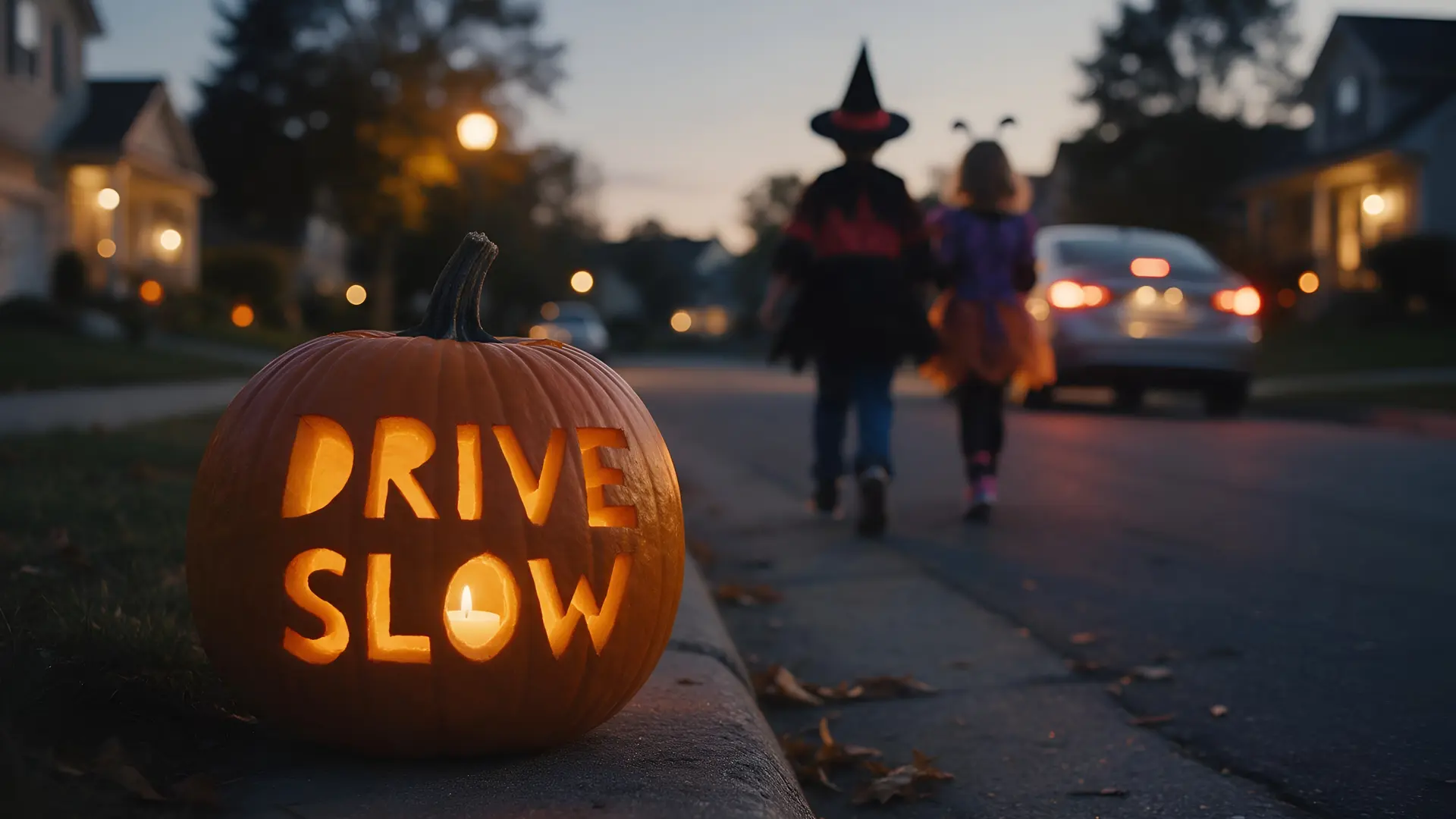
Halloween is an exciting night for children and families. Porch lights glow, neighborhoods fill with costumes, and trick-or-treaters move from house to house in the fading light.
For drivers, Halloween requires something different: more attention, more patience, and better decisions.
The National Highway Traffic Safety Administration (NHTSA) warns that Halloween brings more pedestrians onto the roads, often in unexpected places. Children may be excited, distracted, difficult to see, or may suddenly enter the roadway.
The safest approach is simple: expect the unexpected.
Why Is Halloween One of the Most Dangerous Nights for Pedestrians?
Halloween combines heavy foot traffic, darkness, costumes, excitement, and alcohol. The numbers reflect it:
- A JAMA Pediatrics study of 42 years of federal crash data found the risk of a pedestrian death is 43% higher on Halloween than on comparison nights, and children ages 4 to 8 face 10 times the risk.
- A MoneyGeek analysis of federal crash records found that more children were killed while walking on Halloween from 2010 to 2024 than on any other date on the calendar.
- NHTSA reports that in 2024, nearly half of all crash fatalities on Halloween night were alcohol-related.
This year, Halloween falls on a Saturday, and daylight saving time ends early Sunday morning. That means a full night of parties, later traffic, and, starting the following week, evening commutes that move into darkness.
What Time Is Most Dangerous for Trick-or-Treaters?
The highest-risk window is between 5 p.m. and 8 p.m., with risk peaking around 6 p.m., according to the same JAMA Pediatrics research. That is exactly when trick-or-treating is in full swing and daylight is fading. If you must drive during those hours, plan for neighborhood streets to take longer than usual.
What Are the Most Important Halloween Safety Tips for Drivers?
1. Slow Down in Neighborhoods
Halloween night isn't the time to be in a hurry.
Reduce your speed when driving through residential neighborhoods, especially when you see children, groups of pedestrians, parked vehicles, or Halloween activity.
Slowing down accomplishes two important things: it gives you more time to recognize a hazard, and it gives you more time and distance to stop.
Don't wait until you see a child in the roadway to slow down. Adjust your speed before the potential hazard develops.
2. Look Between Parked Vehicles
Children don't always cross where we expect them to.
A child may suddenly step or run into the roadway from behind a parked vehicle, tree, decoration, or other visual obstruction.
Instead of focusing only on the vehicle directly ahead of you, expand your search pattern. Look at:
- Sidewalks
- Driveways
- Crosswalks
- Intersections
- Between parked vehicles
- Yards and groups of children approaching the road
Good drivers don't simply react to hazards. They look for clues that a hazard could develop. That is the foundation of every defensive driving skill we teach.
3. Darkness Makes Pedestrians Harder to See
Halloween activities often take place around dusk and after dark.
That creates another challenge for drivers. Costumes aren't necessarily designed for visibility. Dark clothing, masks, rain, glare, and poorly lit streets can make pedestrians difficult to identify.
Make sure your headlights are on, keep your windshield clean inside and out, reduce your speed, and continuously scan both sides of the roadway.
Never assume that because you don't see a pedestrian, there isn't one nearby.
4. Eliminate Distractions
Halloween night demands your full attention.
Put the phone away. Avoid adjusting navigation, music, or other controls while traveling through areas with heavy pedestrian activity. Don't allow conversations or activity inside the vehicle to pull your attention away from what's happening outside.
A few seconds of distracted driving can be enough to miss a child entering the roadway.
Eyes up. Phone down. Mind on driving.
5. Be Extra Careful When Turning
Intersections create potential conflicts between vehicles and pedestrians.
Before making a right or left turn, slow down and scan the entire intersection. Look for pedestrians approaching the crosswalk from both directions. Check around parked vehicles and other obstructions. Don't focus so heavily on finding a gap in traffic that you forget to check the area you're turning into.
Before completing the turn, ask yourself: Where am I going, and is that space clear?
6. Don't Assume Children See You
A child may be looking at friends, candy, decorations, or the next house rather than approaching traffic.
Even if you have the right-of-way, don't assume a child will stop. Be prepared to stop for them.
Drivers have the advantage of understanding the danger. That means we also have a responsibility to anticipate the mistakes other road users might make.
7. Watch for Impaired Drivers
Pedestrians aren't the only concern on Halloween.
Parties and alcohol add another serious risk to the roadway. According to NHTSA, 176 people were killed in Halloween-night crashes involving a drunk driver from 2019 to 2024, including 31 pedestrians.
If you're attending a Halloween party and plan to drink, decide how you're getting home before the party begins. Use a designated driver, rideshare, taxi, or another sober transportation option. If you're hosting, help make sure your guests have a safe way home. And if you see a driver you believe is impaired, keep your distance and contact law enforcement when it is safe to do so.
If you drink, don't drive. Buzzed driving is drunk driving.
Trick-or-Treating Safety Tips for Families
Drivers carry the greater responsibility, but families can make children far easier to see. A few simple steps go a long way:
- Light them up. Add reflective tape to costumes and treat bags, and give every child a flashlight or glow stick.
- Choose face paint over masks. Masks can block a child's peripheral vision and hide oncoming headlights.
- Cross at corners and crosswalks. Teach children never to dart out between parked cars, the exact spot drivers have the hardest time seeing.
- Make eye contact. Before stepping into the street, children should look at the driver and confirm the vehicle is stopping.
- Walk, don't run, and stay on sidewalks. Where there are no sidewalks, walk facing traffic on the far edge of the road.
- Supervise young children. Kids ages 4 to 8 face the highest risk, so an adult should be with them at every crossing.
For more pedestrian safety tips, NHTSA's Halloween guide is an excellent family resource.
Should Teen Drivers Be on the Road on Halloween Night?
For many new drivers, Halloween is a night of parties, friends in the car, and unfamiliar dark neighborhoods. That combination asks a lot of limited experience. Parents should talk through the route, the passenger plan, and the curfew before the keys change hands, and make it clear that a call for a ride is always the right decision.
Ohio families can find coaching resources at Teach Your Teen to Drive. For hands-on hazard recognition and decision-making training, DriveTeam's P.B.D.E. Full Program and 2-Day Advanced course build the skills new drivers need for nights exactly like this one. And with darker evenings ahead, our 4-Hour Winter Skills clinic prepares teens for the season that follows.
Halloween Driving Is About Decision-Making
Most drivers already know they're supposed to slow down, watch for pedestrians, put away their phones, and never drive impaired.
The bigger challenge is actually making those decisions behind the wheel.
At DriveTeam, we teach drivers to continually ask:
- What do I see?
- What could happen next?
- What can I do now to prevent it?
On Halloween night, that mindset becomes especially important.
- If you see children walking along a sidewalk, anticipate that someone could enter the road.
- If cars are parked along both sides of the street, anticipate that someone could appear between them.
- If visibility is poor, reduce your speed before you're forced to react.
- If you're approaching a busy intersection, begin searching for pedestrians before you reach it.
That's defensive driving. It's the same thinking we build into our Baseline/ProDriver Hands-On training for fleet and delivery drivers, many of whom will be working neighborhood routes as trick-or-treating begins.
Give Yourself Time and Space
Halloween should end with children going home with bags full of candy and families sharing great memories, not with a preventable crash.
So this Halloween:
- Slow down.
- Look farther ahead.
- Eliminate distractions.
- Watch for pedestrians.
- Never drive impaired.
- Expect the unexpected.
Safe driving isn't simply about controlling the vehicle. It's about making good decisions before a dangerous situation develops.
At DriveTeam, our mission is to increase the Knowledge, Skills, and Decision Making of every driver we work with. This Halloween, let's put all three to work and make sure everyone gets home safely.
Turning Driving into a Skill. Explore DriveTeam's teen driver training programs.
Halloween Driving Safety FAQ
What is the most important Halloween safety tip for drivers?
Slow down in residential neighborhoods and expect children to appear where you least expect them, especially from between parked cars. Reducing your speed gives you more time to see a hazard and more distance to stop.
What time is most dangerous for trick-or-treaters?
Research published in JAMA Pediatrics found the highest pedestrian risk on Halloween falls between 5 p.m. and 8 p.m., peaking around 6 p.m., when trick-or-treating is at its busiest and daylight is fading.
Why is Halloween so dangerous for pedestrians?
More pedestrians are out after dark, many in dark costumes or masks, and children are often excited and distracted. Alcohol adds to the risk. The risk of a pedestrian death is 43% higher on Halloween than on comparison nights.
How can trick-or-treaters be more visible to drivers?
Use reflective tape on costumes and bags, carry a flashlight or glow stick, choose bright colors, and use face paint instead of masks that limit vision. Cross only at corners or crosswalks and make eye contact with drivers before stepping into the street.
What should I do if I see an impaired driver on Halloween?
Keep a safe distance from the vehicle and contact law enforcement when it is safe to do so. If you plan to drink, arrange a designated driver, rideshare, or taxi before the party begins.
More From Our Blog
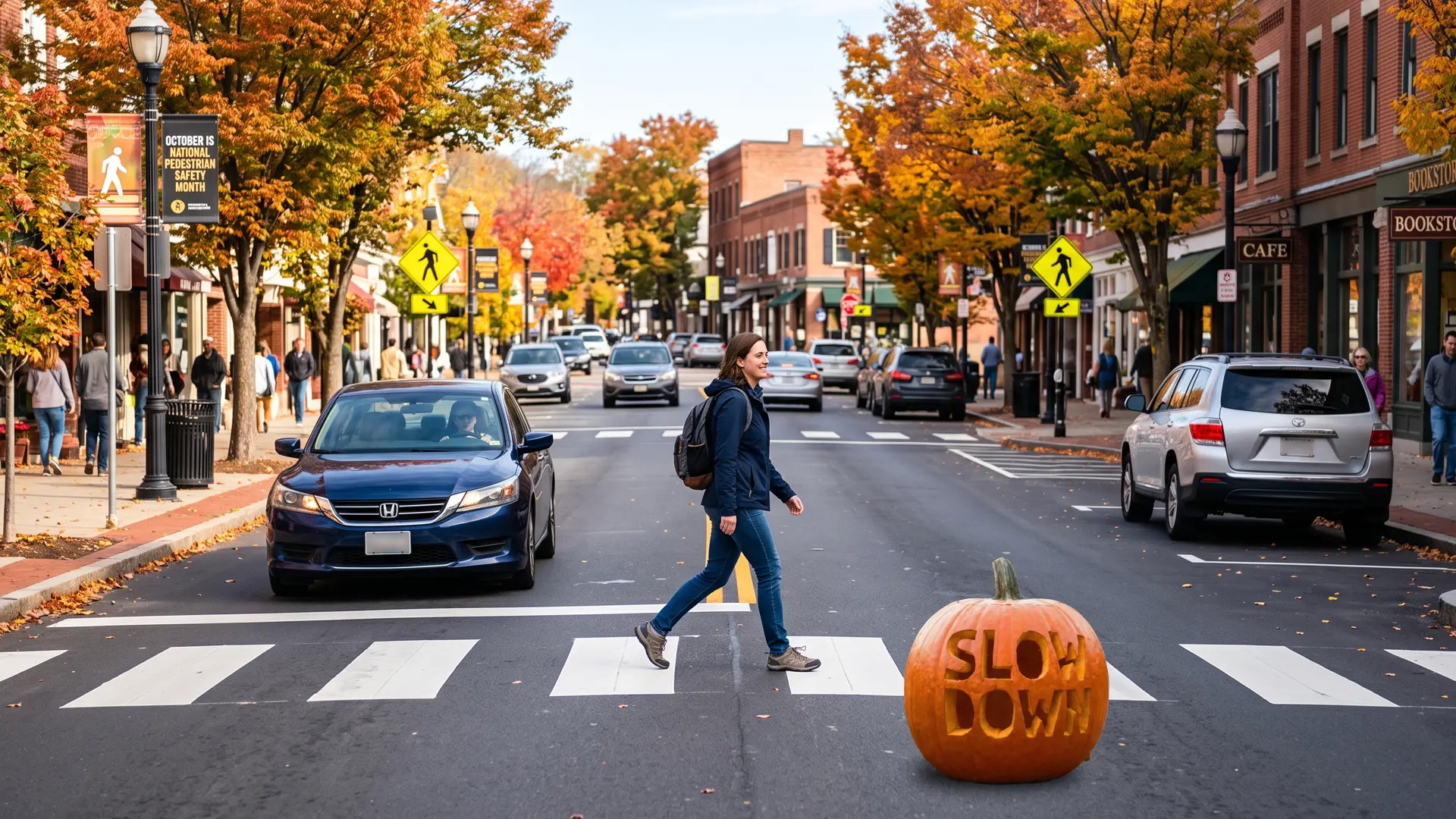
October Is National Pedestrian Safety Month — Here’s What Drivers Need to Know
October doesn't just mean cooler mornings and changing leaves. It's National Pedestrian Safety Month, and the roads carry more foot traffic than almost any other time of year — school pickup lines, sports practices, trick-or-treaters, and Halloween night itself. NHTSA...
Fall Driving Safety Tips: 8 New Hazards Every Driver Needs to Know
The 100 Deadliest Days are over. Fall driving risk is just getting started. As the school-year routine settles in and the 100 Deadliest Days of Summer fade into the rearview mirror, it's tempting to assume the riskiest stretch of the driving year is behind us. It...
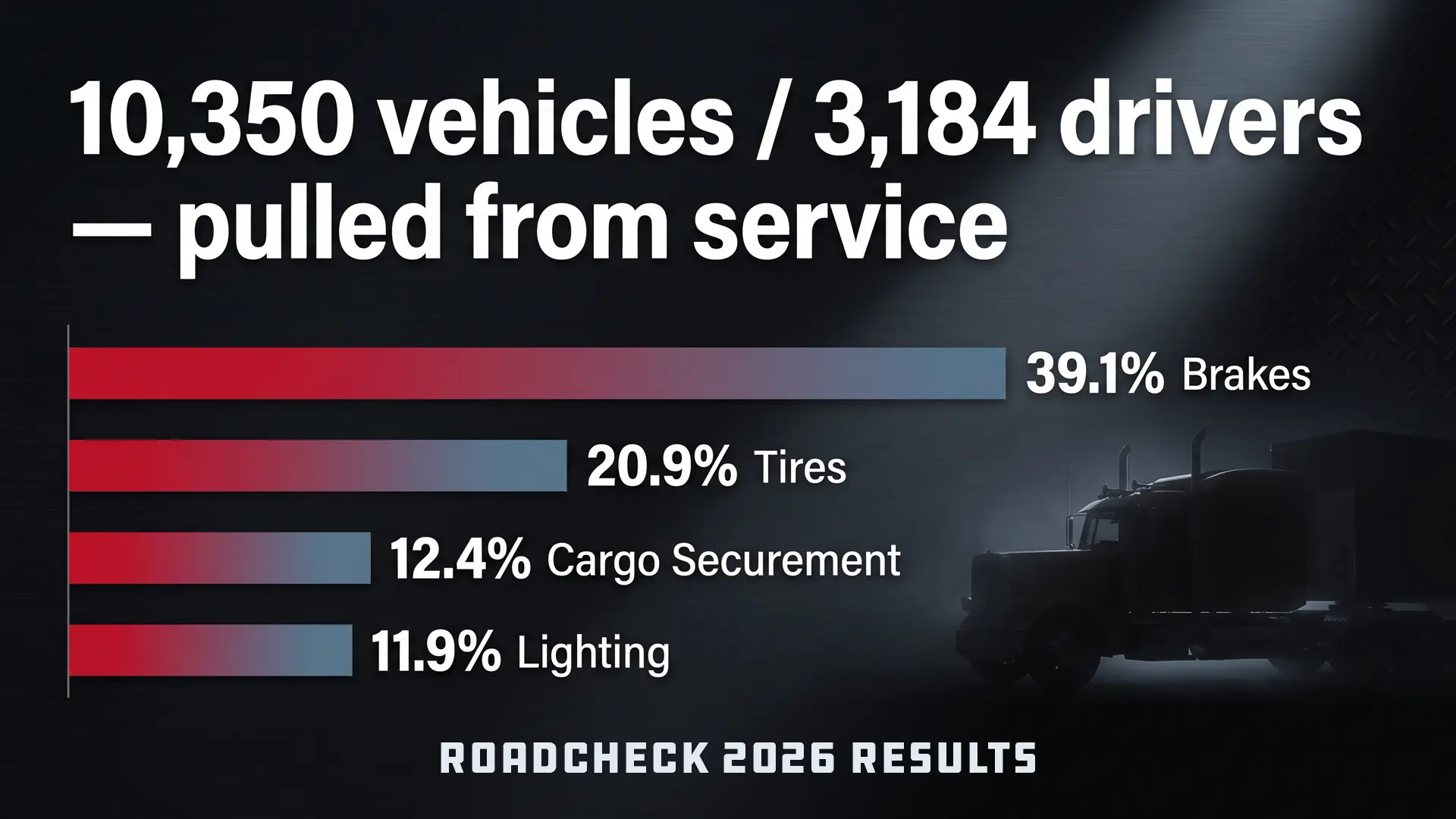
Roadcheck 2026 Results: What 10,000 Grounded Trucks Reveal About Your Fleet’s Risk
During this year's three-day International Roadcheck, certified inspectors conducted 54,575 roadside inspections across the U.S., Canada, and Mexico — and sidelined 10,350 commercial motor vehicles and 3,184 drivers for safety violations serious enough to warrant an...