

The ROI of Fleet Safety Training: What Your Fleet Actually Saves
The math is simple, even if most fleets never run it: the average non-fatal work-related crash costs a company roughly $75,000, and a fatal crash can exceed $750,000 while a comprehensive corporate driver training program costs a fraction of that per driver, per year. Fleet safety training isn't a line item. It's insurance against the single most expensive risk on your balance sheet: your own drivers.
Most fleet managers already sense this. Few can put a number on it. Here's the actual math — and where DriveTeam's Corporate programs fit into it.
What Is a Fleet Safety Program?
A fleet safety program is the set of policies, monitoring practices, and driver training requirements a company uses to reduce accidents, injuries, and liability exposure across its vehicles. At a minimum, it defines who's allowed to drive, what training they complete before and during employment, and how incidents get investigated and corrected.
The gap: fewer than half of companies with company-owned vehicle programs actually require driver safety training. That's the gap DriveTeam's Corporate division exists to close — and it's the single biggest lever most fleets aren't pulling.
The Real Cost of Doing Nothing
Skipping structured training doesn't eliminate the cost of bad driving. It just defers it, and adds interest. A few numbers worth putting in front of your CFO:
- Property-damage-only crash: ~$5,000–$6,300 per incident
- Non-fatal injury crash: ~$75,000 on average
- Fatal crash: $750,000+ in direct costs, with total economic impact often exceeding $1.9 million once lost productivity, legal exposure, and administrative costs are factored in
- Fleet-wide exposure: roughly 20% of a fleet is involved in some type of crash every year — meaning a mid-size fleet isn't asking if it will absorb one of these costs, but *how many*
None of that includes the cost most executives feel first: the insurance renewal. Carriers price commercial and fleet auto coverage on loss history. A single at-fault injury crash can move your Experience Modification Rate (EMR) and your premium for years, long after the vehicle is repaired.
How Corporate Driver Training Reduces Risk and Cost
Reducing fleet risk starts behind the wheel, not in a slideshow. Classroom-only or e-learning modules can check a compliance box, but they don't change what a driver actually does when a truck ahead brakes hard, a load shifts, or black ice appears with no warning. That requires physical, repeatable, hands-on training — which is the foundation of every DriveTeam Corporate program.
DriveTeam's Corporate Driver Training Program has helped client fleets reduce motor vehicle crashes by 35% or more annually. That reduction shows up in three places at once: fewer claims, lower EMR over time, and fewer hours lost to injury, vehicle downtime, and incident administration.
Calculating the ROI: Training Cost vs. Crash Cost
Frame driver training the way your finance team frames any other capital decision — as a cost-avoidance instrument, not a soft benefit.
The comparison is straightforward:
- Training a fleet's driver roster is a fixed, predictable, one-time annual cost.
- A single non-fatal injury crash averages $75,000 before EMR impact, litigation exposure, or reputational cost is factored in.
- Avoiding just one serious incident typically pays for training an entire driver roster, with room to spare.
Every incident avoided compounds: lower claims frequency supports a better EMR, a better EMR supports lower premiums, and lower premiums free up budget — the reverse of the spiral fleets get stuck in in when training gets treated as optional.
DriveTeam's Corporate Training Programs
DriveTeam's Corporate division runs three core programs built around the same pillars that anchor everything we teach — Knowledge, Skills, and Decision Making:
Baseline/ProDriver Hands-On Training
Behind-the-wheel skills development for company drivers, from foundational vehicle control to advanced accident-avoidance maneuvers.
FMCSR Compliance Training
Keeps your CDL and non-CDL drivers current on Federal Motor Carrier Safety Regulations, reducing audit exposure and out-of-service violations.
Load Securement Training
hands-on instruction in properly securing cargo, reducing shifted-load incidents, roadside violations, and the liability that follows both.
Programs are delivered on-site or at our Peninsula, Ohio facility and scaled to fleets of any size — from a handful of company vehicles to full regional fleets. Anchor clients across the energy, telecom, and logistics sectors have used these programs as the standard their entire driver population is trained against.
Frequently Asked Questions
What is a fleet safety program?
A fleet safety program is a structured set of policies, monitoring practices, and driver training requirements a company uses to reduce vehicle accidents, injuries, and liability across its commercial or corporate fleet.
How do you improve fleet safety?
The fastest way to improve fleet safety is hands-on, behind-the-wheel driver training combined with clear safety policy and consistent enforcement. Classroom-only or e-learning programs rarely change driver behavior on their own.
How can I reduce fleet vehicle accidents?
Companies that combine mandatory hands-on driver training with ongoing risk monitoring see the sharpest drop in fleet accidents. DriveTeam's Corporate Training Program has helped clients reduce motor vehicle crashes by 35% or more annually.
Does driver training actually pay for itself?
Yes. With the average non-fatal work-related crash costing roughly $75,000 and fatal crashes exceeding $750,000, avoiding even one serious incident typically covers the cost of training an entire fleet's driver roster for the year.
Protect the Investment You've Already Made
Your fleet is a capital asset. Your drivers are the ones controlling it at 60 mph in traffic you don't get to choose. Training isn't overhead — it's the cheapest risk mitigation tool on the table, and the ROI shows up in your next insurance renewal whether you've measured it or not.
Talk to DriveTeam's Corporate team about a program built around your fleet's actual risk profile.
More From Our Blog

October Is National Pedestrian Safety Month — Here’s What Drivers Need to Know
October doesn't just mean cooler mornings and changing leaves. It's National Pedestrian Safety Month, and the roads carry more foot traffic than almost any other time of year — school pickup lines, sports practices, trick-or-treaters, and Halloween night itself. NHTSA...

Fall Driving Safety Tips: 8 New Hazards Every Driver Needs to Know
The 100 Deadliest Days are over. Fall driving risk is just getting started. As the school-year routine settles in and the 100 Deadliest Days of Summer fade into the rearview mirror, it's tempting to assume the riskiest stretch of the driving year is behind us. It...
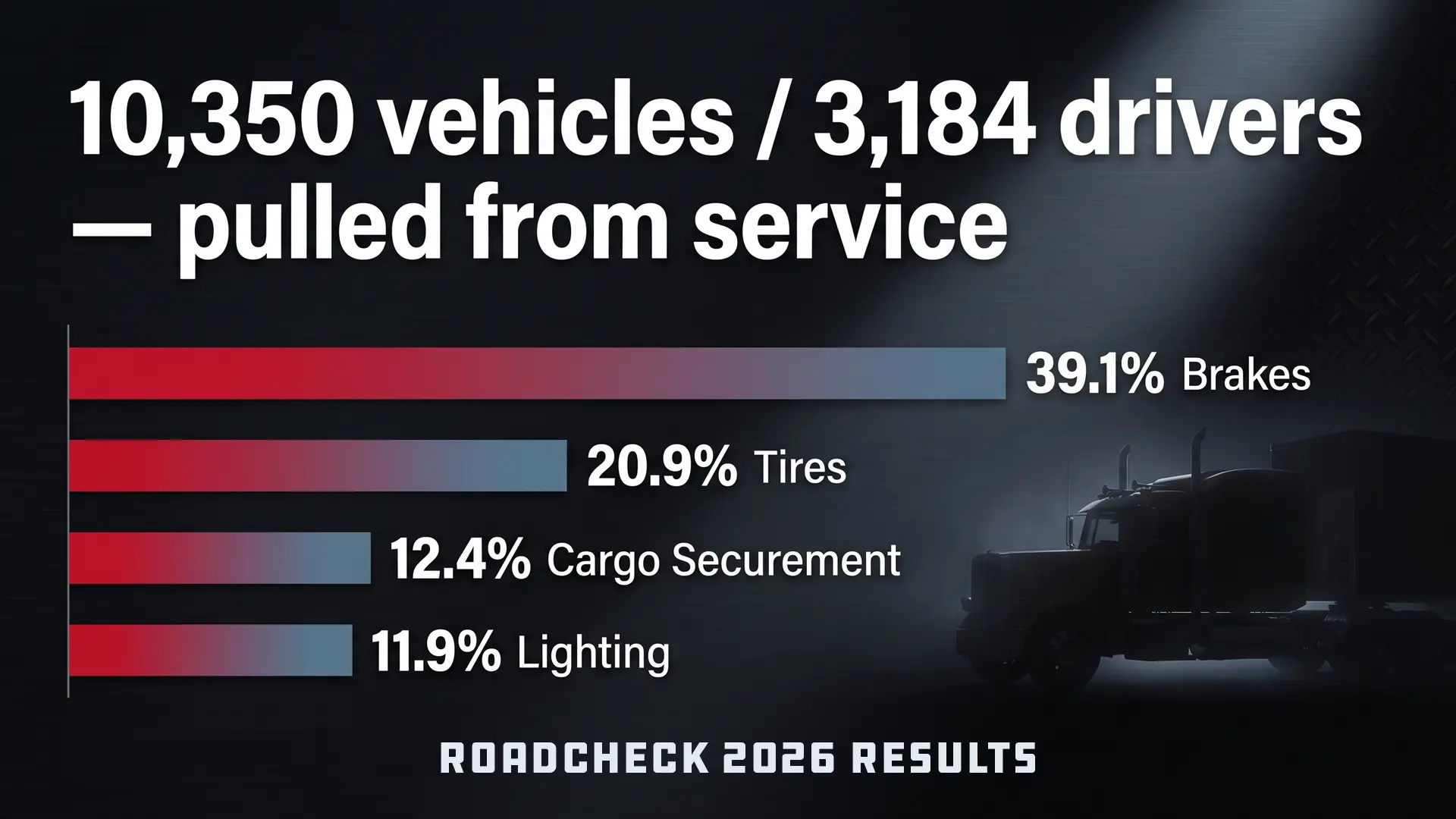
Roadcheck 2026 Results: What 10,000 Grounded Trucks Reveal About Your Fleet’s Risk
During this year's three-day International Roadcheck, certified inspectors conducted 54,575 roadside inspections across the U.S., Canada, and Mexico — and sidelined 10,350 commercial motor vehicles and 3,184 drivers for safety violations serious enough to warrant an...