
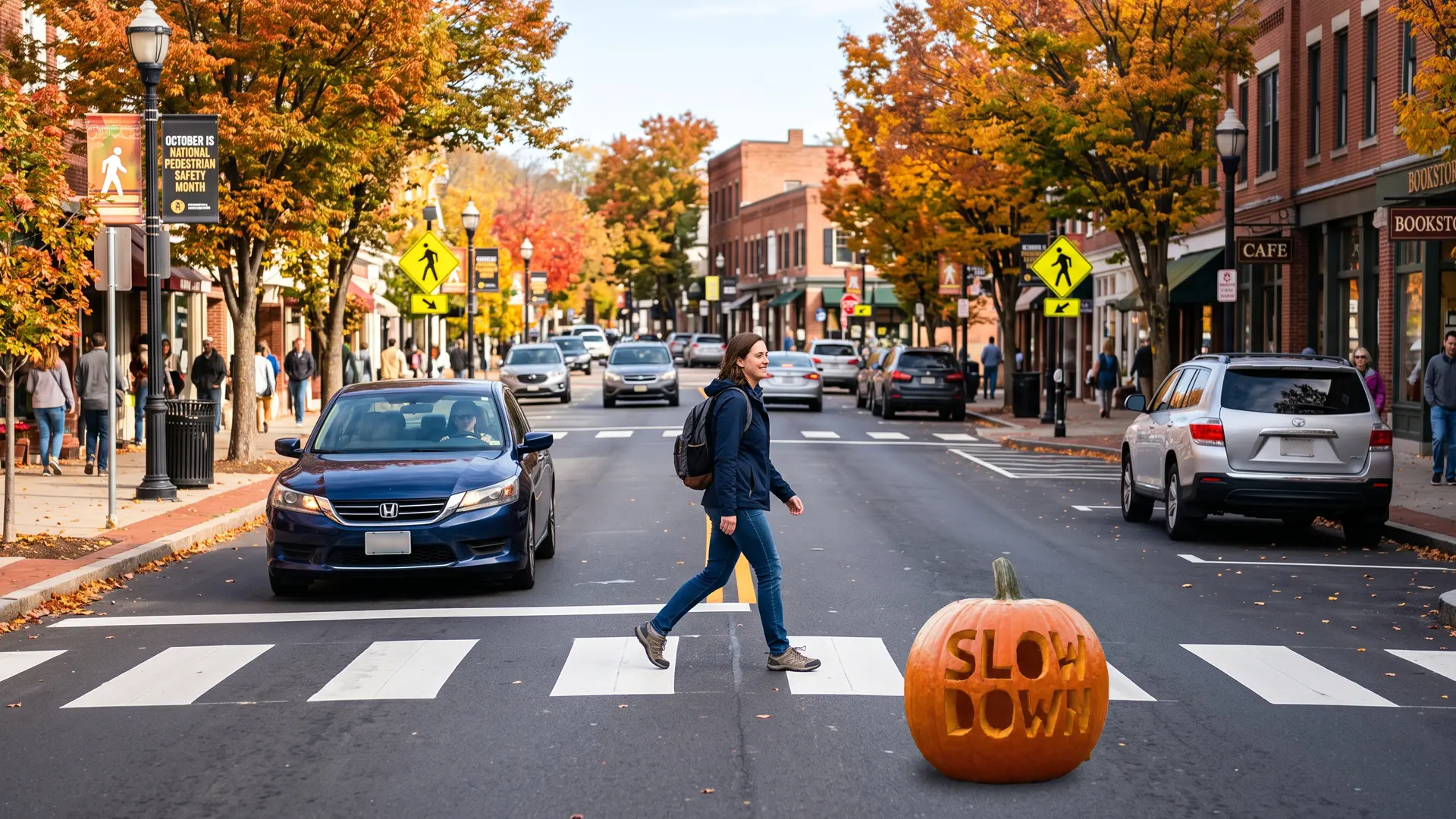
October doesn't just mean cooler mornings and changing leaves. It's National Pedestrian Safety Month, and the roads carry more foot traffic than almost any other time of year — school pickup lines, sports practices, trick-or-treaters, and Halloween night itself.
NHTSA reports 7,080 pedestrian deaths in traffic crashes in 2024, with more than 71,000 injured. October, and Halloween in particular, sits at the sharp end of that statistic.
There's a driving-specific reason October deserves its own attention too. According to the Ohio State Highway Patrol, 47% of all deer-involved crashes from 2019–2023 occurred in October, November and December — meaning your commute home in October can look nothing like it did in July, in more ways than one.
Here's what to build into your driving this month.
Why Is October National Pedestrian Safety Month?
NHTSA designates October as National Pedestrian Safety Month because it sits at the intersection of several rising risk factors: school is fully back in session, daylight is shrinking fast, and Halloween puts more children on foot near traffic, after dark, than any single night of the year.
What to do: Treat October as a seasonal reset on pedestrian awareness — not just around schools, but in neighborhoods, parking lots and anywhere foot traffic picks up this time of year.
What Should Drivers Know About Trick-or-Treating Safety?
Halloween isn't just about costumes and candy for drivers — it's one of the highest pedestrian-risk nights of the year. Children are on foot in unfamiliar places, often in low-visibility costumes, crossing between parked cars, and focused on friends or candy rather than traffic.
NHTSA specifically encourages drivers around Halloween to slow down, scan the road, and watch for children in unexpected places — because kids don't always behave predictably around traffic. They may run between parked cars, cross outside a crosswalk, or step into the road without warning.
What to do: Slow well below the posted limit in residential areas on Halloween evening. Scan sidewalks, yards and the space between parked cars, not just the road ahead. Assume a costume means reduced visibility, not increased caution on the child's part.
Is Halloween Night More Dangerous for Drivers Too?
Yes — and not only because of pedestrians. NHTSA reports that nearly half of crash fatalities on Halloween night in 2023 were alcohol-related. That combination — more pedestrians on foot after dark, plus a measurable spike in impaired driving — makes Halloween night one of the riskier nights of the year to be on the road at all.
What to do: Build in extra following distance and extra reaction time after dark on Halloween, the same way you would in fog or heavy rain. Assume both distracted drivers and distracted pedestrians share the road with you.
How Common Are Deer Crashes in October?
Very. The Ohio State Highway Patrol found that 47% of all deer-involved crashes between 2019 and 2023 happened in October, November and December — with dawn and dusk carrying the highest risk within that window. October marks the start of that spike, not the middle of it, which means many drivers get caught off guard before they've adjusted their habits for the season.
What to do: Slow down in deer-common areas, especially around dawn and dusk. Watch the roadside, not just the roadway — and if you see one deer, expect more to follow. For the full seasonal hazard breakdown (wet leaves, fog, earlier darkness and more), see DriveTeam's complete fall driving hazards guide.
What Should Drivers Watch for Near Schools in October?
October brings a full return to routine: school pickup and drop-off, after-school sports, and neighborhood foot traffic that builds as fall activities ramp up. A route driven all summer without incident can create complacency — and complacency is what makes drivers stop actively scanning for pedestrians they'd otherwise catch.
What to do: Treat school zones, bus stops and residential streets as active-hazard zones during commute windows, even on routes you know well. Watch between parked vehicles, not just the sidewalk.
The Mental Side of October Driving
Vehicle control isn't the only thing that changes this month — decision-making does too. Before you pull out of the driveway, run through it:
- What's next? Look farther down the road than the vehicle directly ahead.
- What's different today? Familiarity isn't the same as safety — weather, lighting and traffic patterns shift fast in October.
- Am I in the right mindset to drive? Stress, frustration and distraction all reduce the margin you have to react.
- Do I need to slow down? Often the safest decision is simply less speed and more time.
October Is About Preparation, Not Panic
October doesn't have to mean more dangerous driving — it means different driving. The best drivers don't wait for a hazard to surprise them; they anticipate changing conditions and adjust their speed, space and attention accordingly.
This month, keep three things in view: pedestrians are more present and less predictable, deer activity is climbing toward its seasonal peak, and darkness is arriving earlier than your habits have caught up to.
At DriveTeam, our mission is to increase the Knowledge, Skills and Decision Making of every driver we train — every season is a new opportunity to sharpen all three.
Related reading: Fall Driving Safety Tips: 8 New Hazards Every Driver Needs to Know
Frequently Asked Questions
Why is October National Pedestrian Safety Month?
NHTSA designates October as National Pedestrian Safety Month because school is back in full session, daylight hours are shrinking, and Halloween puts more children on foot near traffic after dark than any other night of the year.
Is Halloween actually more dangerous for driving?
Yes. NHTSA reports nearly half of crash fatalities on Halloween night in 2023 were alcohol-related, and pedestrian risk — especially for children — rises sharply as trick-or-treating brings more foot traffic into residential streets after dark.
How common are deer crashes in October?
The Ohio State Highway Patrol found that 47% of all deer-involved crashes from 2019–2023 happened in October, November and December, with dawn and dusk carrying the highest risk. October marks the start of that seasonal spike.
What should drivers do differently on Halloween night?
Slow down well below the posted limit in residential areas, scan sidewalks and the space between parked cars rather than just the road ahead, and build in extra following distance to account for both distracted pedestrians and impaired drivers.
What is the biggest pedestrian safety mistake drivers make in October?
Assuming a familiar route is a safe route. Complacency on routes driven all summer is what causes drivers to stop actively scanning for the pedestrians, school traffic and deer activity that all increase in October.
More From Our Blog
Fall Driving Safety Tips: 8 New Hazards Every Driver Needs to Know
The 100 Deadliest Days are over. Fall driving risk is just getting started. As the school-year routine settles in and the 100 Deadliest Days of Summer fade into the rearview mirror, it's tempting to assume the riskiest stretch of the driving year is behind us. It...
Roadcheck 2026 Results: What 10,000 Grounded Trucks Reveal About Your Fleet’s Risk
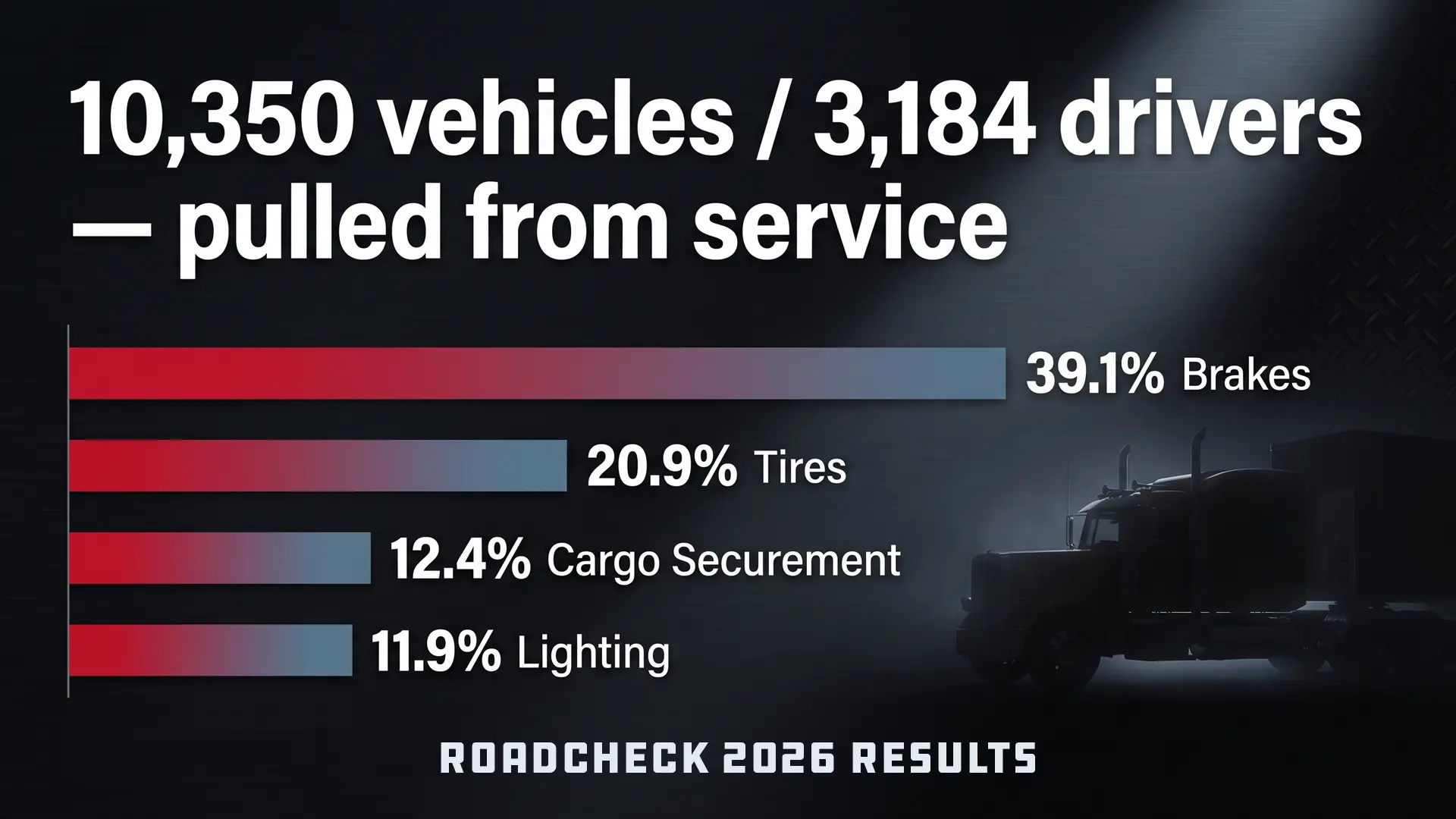
During this year's three-day International Roadcheck, certified inspectors conducted 54,575 roadside inspections across the U.S., Canada, and Mexico — and sidelined 10,350 commercial motor vehicles and 3,184 drivers for safety violations serious enough to warrant an...
Brake Safety Isn’t a One-Week Event: What Fleet Managers Should Take from CVSA’s Brake Safety Week
Brake Safety Week Ends August 29. Brake Safety Doesn't. Every year, the Commercial Vehicle Safety Alliance's Brake Safety Week puts a spotlight on one of the most consistent causes of commercial vehicle out-of-service violations: brakes. For seven days, inspectors...