

Brake Safety Week Ends August 29. Brake Safety Doesn't.
Every year, the Commercial Vehicle Safety Alliance's Brake Safety Week puts a spotlight on one of the most consistent causes of commercial vehicle out-of-service violations: brakes. For seven days, inspectors across North America focus specifically on braking systems, and fleets scramble to make sure their equipment passes. Then the week ends, and for many operations, so does the focus. That gap between the inspection and the day-to-day is where risk lives.
What Was Brake Safety Week 2026 Actually Checking?
This year's Brake Safety Week emphasized brake drums and rotors ~ components that directly affect braking efficiency and, when damaged, can themselves become roadway hazards. Inspectors were looking for cracked, worn, or improperly mounted components that reduce a vehicle's ability to stop safely under load.
Why Do Brake Violations Top the Out-of-Service List?
CVSA's Operation Airbrake program is direct about this: brake-related violations account for the largest percentage of all out-of-service violations found during roadside inspections — more than any other single category of defect. A commercial vehicle carries significant weight and momentum, and a compromised brake system doesn't just fail an inspection. It changes the outcome of the next hard stop.
What Should Drivers and Fleet Managers Do Now That the Week Is Ending?
The goal was never to pass one inspection. It's to run a fleet that's safe on day 366, not just during the seven days CVSA is watching. Four habits carry that mindset forward:
- Inspect it. Brake systems belong in every pre-trip and post-trip inspection — not just the ones during an enforcement campaign. Look for damaged, cracked, loose, contaminated, or missing components, and flag anything that doesn't look or feel right.
- Report it. A defect that isn't reported is a defect that stays on the road. Build a reporting habit that treats brake concerns as non-negotiable, not optional paperwork.
- Maintain it. Preventive maintenance is consistently the cheapest option on the table — far less costly than a roadside breakdown, an out-of-service violation, or a crash.
- Respect the weight. A loaded commercial vehicle needs significant braking performance to control its momentum. Proper brakes aren't a compliance line item; they're what keeps stopping distance survivable.
What's the Financial Case for Year-Round Brake Discipline?
For risk and safety leadership, this isn't just a maintenance conversation ~ it's an EMR conversation. Out-of-service violations show up in CSA scores, CSA scores show up in insurance renewals, and a crash caused by a preventable brake failure shows up everywhere: claims costs, driver downtime, and liability exposure. One week of inspections can catch existing problems. A year-round maintenance and training culture prevents them from happening in the first place — and that's the difference that shows up on a renewal conversation with your broker.
Building the Habit Beyond the Week
At DriveTeam, we build safety through knowledge, skills, preparation, and consistent decision-making ~ the same principles behind our Corporate training programs, including Baseline/ProDriver Hands-On instruction and FMCSR-focused coursework. Inspection discipline isn't something a driver should relearn every August. It's a habit built into daily operations, and it's one of the fastest, most measurable ways fleets reduce crash rates and out-of-service exposure.
Give every trip the same standard CVSA held your fleet to this week: a vehicle that's actually ready for the road, and the stopping distance to prove it. See how DriveTeam's Corporate training programs build that discipline in.
Related reading: Why the Four-Second Rule Matters for Safe Following Distance
Frequently Asked Questions
**What is CVSA Brake Safety Week?**
An annual seven-day CVSA enforcement and education initiative focused on commercial vehicle braking systems; 2026's emphasis was brake drums and rotors.
Why do brakes cause the most out-of-service violations?
CVSA's Operation Airbrake data shows brake-related violations represent the largest share of all out-of-service violations found during roadside inspections.
How often should commercial vehicle brakes be inspected?
Every pre-trip and post-trip inspection ~ not only during scheduled maintenance or CVSA's enforcement campaigns.
How does DriveTeam help fleets reduce brake-related risk?
Through Corporate training programs ~ including Baseline/ProDriver Hands-On and FMCSR-focused instruction ~ that build inspection discipline and hazard recognition into daily driver behavior.
More From Our Blog

October Is National Pedestrian Safety Month — Here’s What Drivers Need to Know
October doesn't just mean cooler mornings and changing leaves. It's National Pedestrian Safety Month, and the roads carry more foot traffic than almost any other time of year — school pickup lines, sports practices, trick-or-treaters, and Halloween night itself. NHTSA...

Fall Driving Safety Tips: 8 New Hazards Every Driver Needs to Know
The 100 Deadliest Days are over. Fall driving risk is just getting started. As the school-year routine settles in and the 100 Deadliest Days of Summer fade into the rearview mirror, it's tempting to assume the riskiest stretch of the driving year is behind us. It...
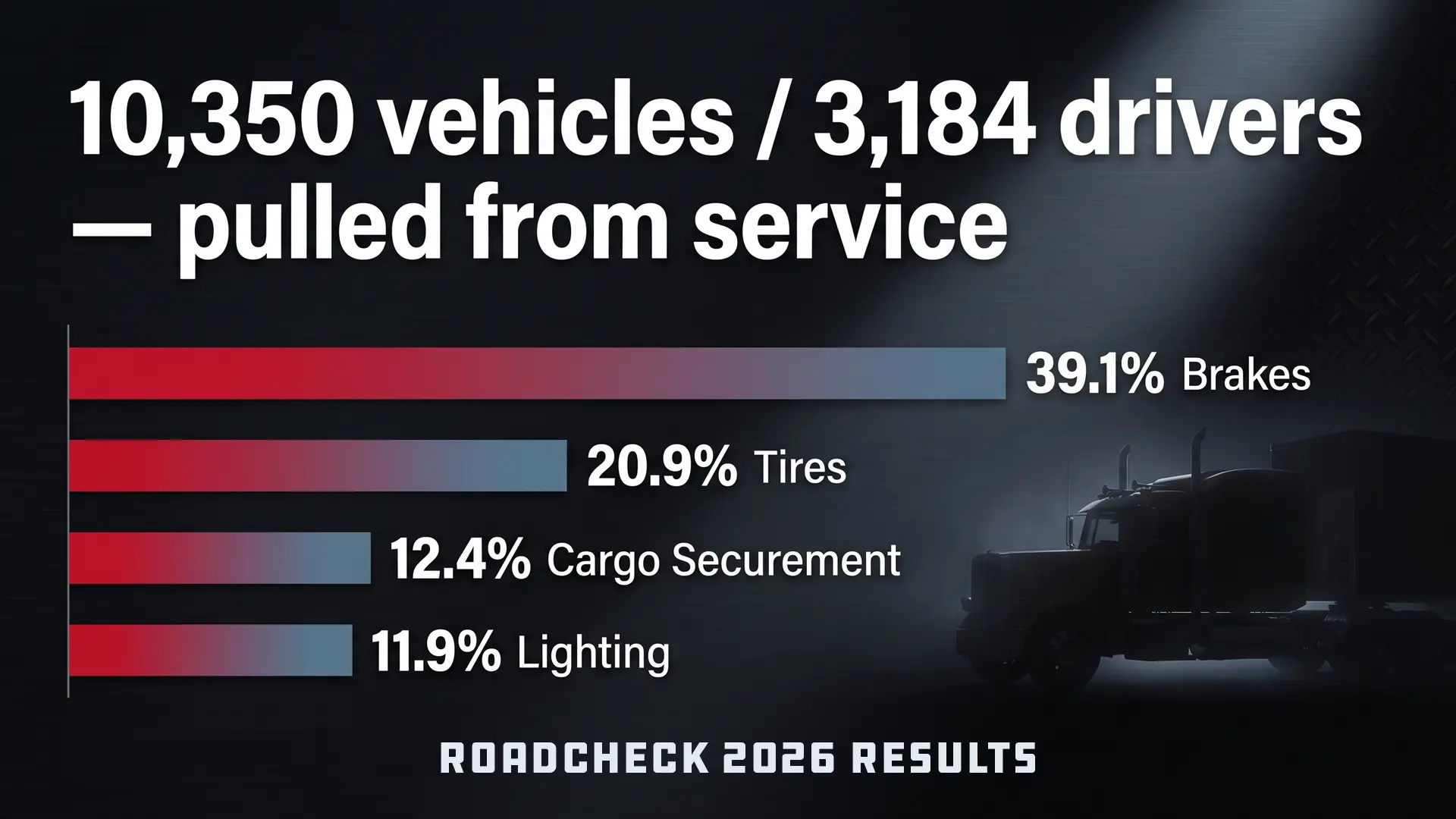
Roadcheck 2026 Results: What 10,000 Grounded Trucks Reveal About Your Fleet’s Risk
During this year's three-day International Roadcheck, certified inspectors conducted 54,575 roadside inspections across the U.S., Canada, and Mexico — and sidelined 10,350 commercial motor vehicles and 3,184 drivers for safety violations serious enough to warrant an...