

Distracted driving kills over 3,000 people in the United States every year. Everyone knows the obvious culprits — texting at highway speed, eating behind the wheel, a passenger demanding your attention. But there is a form of distracted driving hiding in plain sight, happening in parking lots across the country every single day, and almost nobody is talking about it. It starts the moment a driver sits back down in their car.
What Is Distracted Driving — and Why the Definition Is Too Narrow
Distracted driving is any activity that diverts a driver's attention from the primary task of operating a vehicle safely. The three recognized categories are visual distraction (eyes off the road), manual distraction (hands off the wheel), and cognitive distraction (mind off the task). Most public awareness campaigns stop at texting and calling — but those three categories apply the moment a driver starts their engine, not just when they're moving at speed.
The parking lot is the overlooked killzone. Speed is low, so urgency feels low. But low speed doesn't equal low consequence when a pedestrian, a shopping cart, or a reversing vehicle appears without warning.
The Parking Lot Phone Scroll: A New and Dangerous Pattern
Here's a scenario playing out in grocery store parking lots every day. A driver loads the trunk, settles into the seat, buckles up, and starts the car. The sequence feels routine — deliberate, even responsible. Then the phone comes out.
What happens next is the problem. After spending 30, 60, sometimes 90 seconds scrolling, texting, or checking notifications, the driver sets the phone down and immediately pulls out. No mirror check. No head turn. No scan of the surrounding environment.
Why? Because their mental model of the environment is frozen at the moment they picked up the phone. They remember the empty space behind them when they sat down. They don't account for what moved, who walked through, or what parked while they were distracted. The environment changed. Their awareness didn't.
The result: near-misses with pedestrians, backing into other vehicles, cutting off drivers in the travel lane. DriveTeam instructors have witnessed this pattern repeatedly — a driver fully capable of safe operation, making a preventable error because they violated one of the most fundamental principles of safe driving: continuous Decision Making.
Why Is Distracted Driving So Dangerous — Even at Low Speeds?
Speed doesn't determine danger. Awareness gaps do. At 5 mph in a parking lot, a driver who fails to check their environment before moving has already lost the margin they need to react. Pedestrians — especially children — can cross behind a vehicle in under two seconds. A shopping cart in a blind spot doesn't announce itself. Another vehicle completing a reverse maneuver at the same moment creates a collision with zero warning time.
Cognitive distraction is the most insidious of the three types because it doesn't require looking away. A driver who has just been scrolling their phone carries a residual mental load — what researchers sometimes call "attention residue" — that impairs situational awareness for seconds after they put the phone down. They look in the mirror, but they don't fully process what they see.
The Three Types of Distracted Driving — and Which One the Parking Lot Scroll Violates
Understanding the categories clarifies why this scenario is especially dangerous:
- Visual distraction — Eyes leave the road or surrounding environment. The parking lot scroll does this completely.
- Manual distraction — Hands leave the wheel or controls. Holding the phone while the car is in park still primes the habit loop.
- Cognitive distraction — Mental focus shifts from driving. This is the one that lingers. The phone puts the driver in a different mental state, and returning to full situational awareness takes intentional effort — effort most drivers don't make.
The parking lot scroll hits all three categories — and critically, the cognitive distraction persists into the moment the driver begins to move.
What Situational Awareness in Driving Actually Means
Situational awareness in driving means maintaining a continuously updated mental picture of your environment — what is present, where it is, how it is moving, and what it is likely to do next. It is not a one-time check before you move. It is an ongoing process that resets every time conditions change.
At DriveTeam, this falls under our core curriculum pillar: **Decision Making**. A driver who picks up their phone in a parked car and then moves without reassessing has broken the Decision Making loop. They are acting on stale information in a dynamic environment — and that gap is where accidents live.
The fix isn't complicated. It is intentional:
- Before moving from any stationary position, conduct a full mirror and head-turn environmental scan.
- Treat any period of phone use in a stationary vehicle as a full reset — assume the environment has changed, because it may have.
- Develop the habit of a 3-second pause before engaging drive or reverse after any distraction.
- If you need to use your phone, park away from pedestrian traffic to reduce the stakes of the inevitable re-entry moment.
How to Prevent Distracted Driving in Everyday Situations
Prevention isn't just about removing the phone from reach at highway speed. It requires building habits that cover the full driving context — including the parts drivers don't think of as "driving."
For teen drivers especially, the parking lot is a training ground. The habits formed in low-stakes environments become automatic in high-stakes ones. A teen who learns to reassess before every move — in a parking lot, in a driveway, at a light — carries that habit onto the highway. DriveTeam's P.B.D.E. Full Program builds these decision-making frameworks from day one, specifically because foundational habits matter more than any single skill.
For corporate fleets, parking lot incidents account for a disproportionate share of minor collision costs — often underreported, but consistently present in fleet loss data. Drivers who believe they are only "distracted driving" when moving at speed don't account for the exposure that starts the moment they get behind the wheel. Learn more about DriveTeam Corporate Fleet Safety Training
DriveTeam's Take: Decision Making Doesn't Have an Off Switch
"Turning Driving into a Skill"
Means treating every moment behind the wheel — or transitioning to being behind the wheel — as a moment that requires intentional decision making. **Knowledge, Skills, Decision Making**: the third element doesn't engage only at 60 mph. It engages the moment you sit in that seat.
The parking lot phone scroll feels harmless. The vehicle is stopped. The speed is zero. But the decision to move — made without current, accurate information about the environment — is made under distraction. That's the trap.
Train the habit out of the situation before it costs you.
Teen Driver Programs → driveteam.com/teen/
Corporate Fleet Training → driveteam.com/corp/
E.R.O.C. Police, Fire & EMS → driveteam.com/e-r-o-c/
Contact Us → driveteam.com/contact-us/
Frequently Asked Questions
What are the three main categories of distracted driving?
The three main categories of distracted driving are visual distraction (taking your eyes off the road), manual distraction (taking your hands off the wheel), and cognitive distraction (taking your mind off driving). Most dangerous behaviors — including phone use — involve all three simultaneously.
Is distracted driving dangerous in a parking lot?
Yes. Parking lots generate a significant share of vehicle-pedestrian and vehicle-vehicle incidents. Low speed reduces reaction force but does not eliminate it, and the density of pedestrians, shopping carts, and vehicles in motion makes situational awareness critical. Using a phone while parked and then moving immediately without reassessing the environment is a common and underrecognized form of distracted driving.
What are the 4 types of distractions while driving?
Some frameworks expand the standard three to four types by separating auditory distraction (sounds that draw attention away from driving, such as notification alerts) as a distinct category alongside visual, manual, and cognitive distractions.
How do you prevent distracted driving in everyday situations?
Effective prevention includes placing your phone out of reach before starting the vehicle, committing to a full environmental scan before moving from any stationary position, treating any in-vehicle phone use as a "decision-making reset," and receiving formal driver training that embeds situational awareness habits — not just reactive skills.
Why is cognitive distraction in driving the most dangerous type?
Cognitive distraction is the most dangerous type because it doesn't require taking your eyes off the road to impair your ability to process what you see. Research shows that drivers engaged in mentally demanding tasks — including those who have just finished them — experience measurably reduced hazard detection and slower reaction times, even when looking directly at the road.
More From Our Blog

October Is National Pedestrian Safety Month — Here’s What Drivers Need to Know
October doesn't just mean cooler mornings and changing leaves. It's National Pedestrian Safety Month, and the roads carry more foot traffic than almost any other time of year — school pickup lines, sports practices, trick-or-treaters, and Halloween night itself. NHTSA...

Fall Driving Safety Tips: 8 New Hazards Every Driver Needs to Know
The 100 Deadliest Days are over. Fall driving risk is just getting started. As the school-year routine settles in and the 100 Deadliest Days of Summer fade into the rearview mirror, it's tempting to assume the riskiest stretch of the driving year is behind us. It...
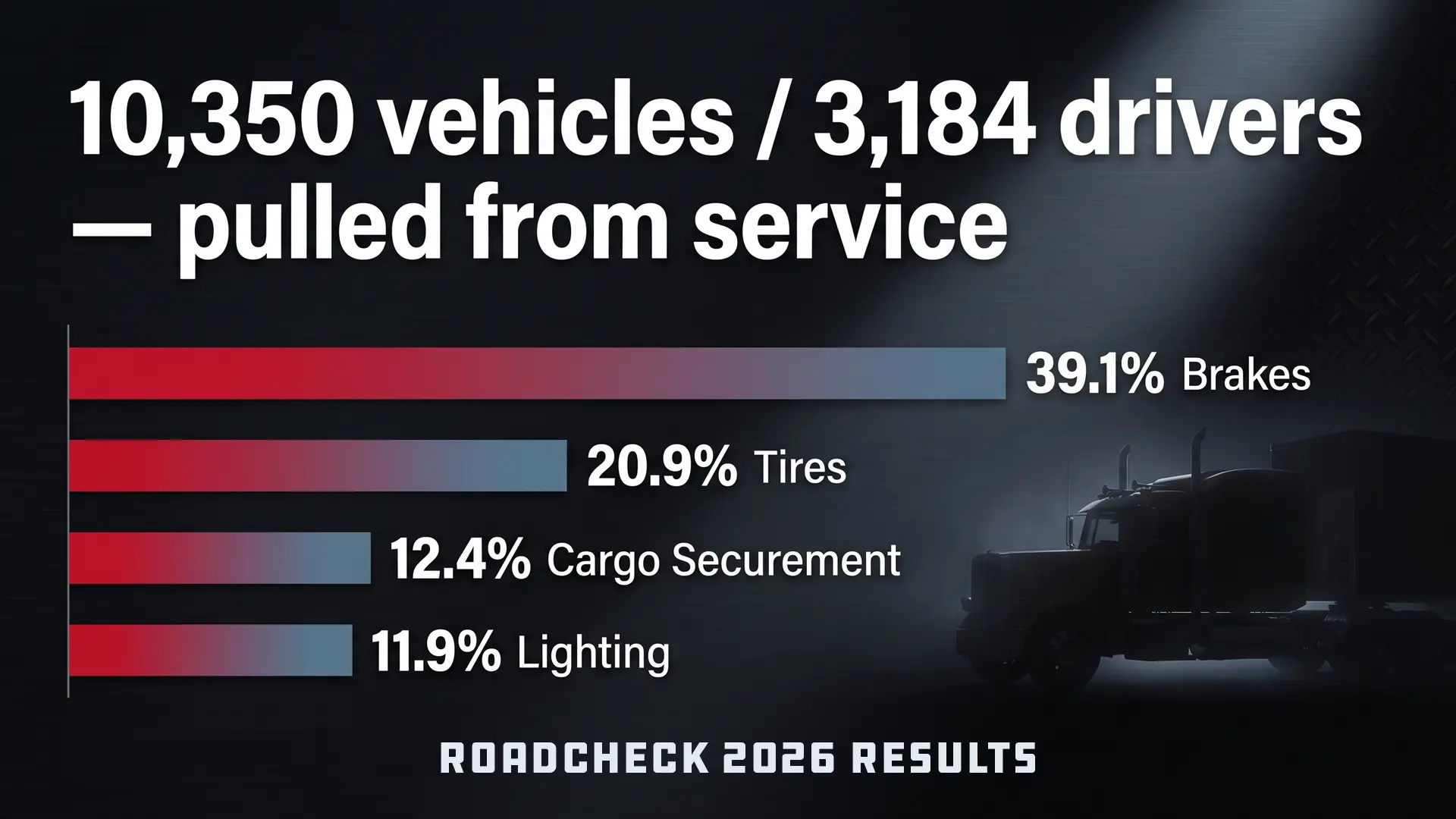
Roadcheck 2026 Results: What 10,000 Grounded Trucks Reveal About Your Fleet’s Risk
During this year's three-day International Roadcheck, certified inspectors conducted 54,575 roadside inspections across the U.S., Canada, and Mexico — and sidelined 10,350 commercial motor vehicles and 3,184 drivers for safety violations serious enough to warrant an...