
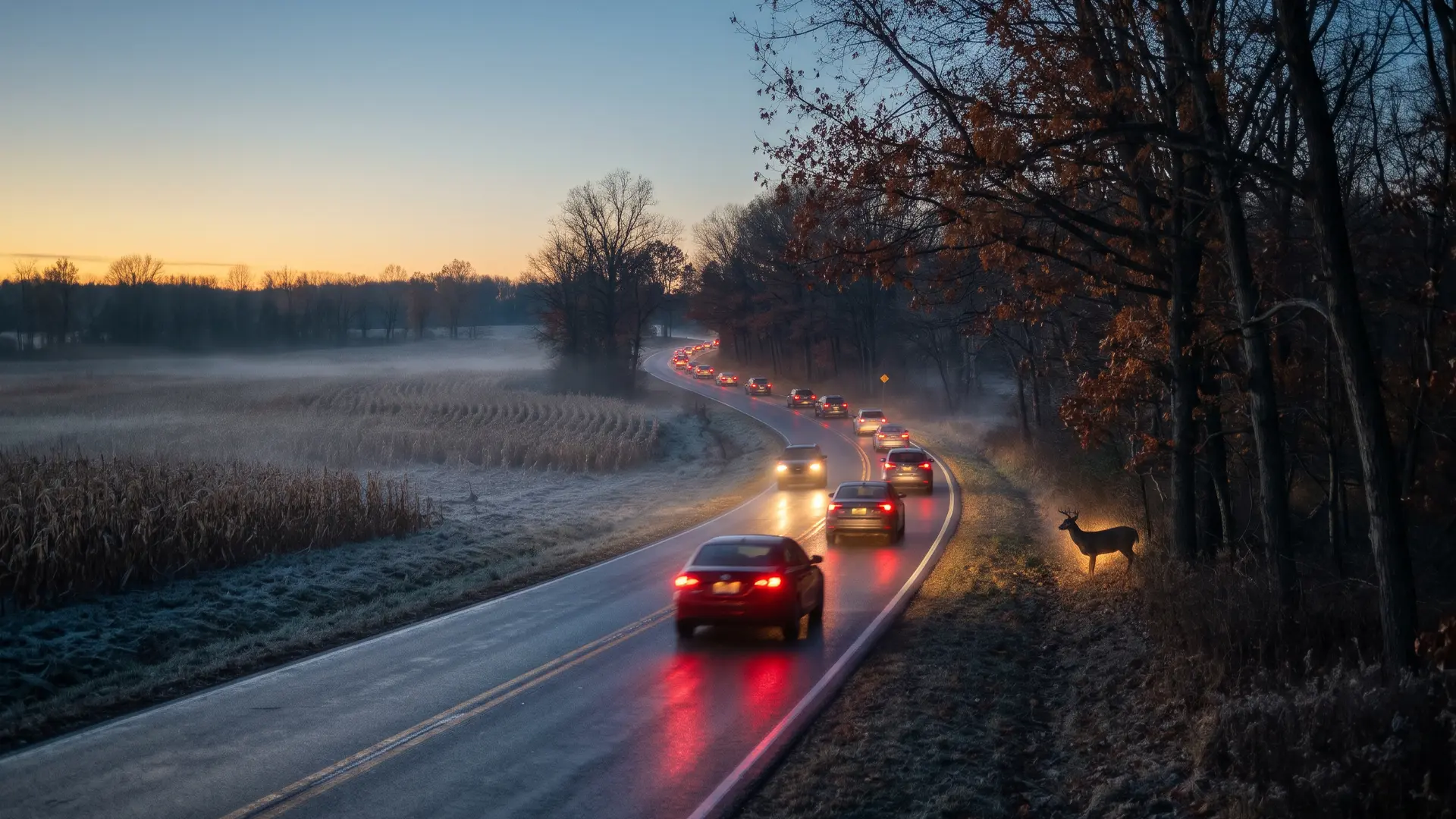
Quick answer: The safest way to drive this Thanksgiving is to make good decisions before an emergency happens. Adjust your speed to conditions, keep at least a four-second following distance, scan far ahead for stopped traffic and deer, eliminate distractions and fatigue, and never drive impaired. Leave in the morning to avoid the worst congestion on Tuesday, November 24 and Wednesday, November 25.
Thanksgiving is a time for family, friends, and gratitude. It is also one of the busiest travel periods of the year. AAA forecasts that 81.5 million Americans will travel at least 50 miles from home between Tuesday, November 24 and Monday, November 30, and 72.9 million of them will make the trip by car.
Add unpredictable November weather, headlights switching on before 5 p.m., deer moving at the edge of the tree line, and drivers rushing to reach the table, and the risk on our roadways climbs fast.
Whether you are crossing the country or just crossing town, here are five habits every driver should focus on this Thanksgiving holiday.
When Is Thanksgiving Traffic the Worst in 2026?
The busiest days on the road are the Tuesday and Wednesday before Thanksgiving, followed by the weekend return. Transportation data firm INRIX, in partnership with AAA, projects these windows:
| Day | Worst time to drive | Best time to drive |
|---|---|---|
| Tuesday, Nov. 24 | 2 p.m. to 8 p.m. | Before 1 p.m. |
| Wednesday, Nov. 25 | Noon to 7 p.m. | Before noon |
| Thanksgiving Day, Nov. 26 | Minimal traffic expected | Lightest day of the week |
| Friday, Nov. 27 | 1 p.m. to 7 p.m. | Before noon |
| Saturday, Nov. 28 | Noon to 9 p.m. | Before 11 a.m. |
| Sunday, Nov. 29 | Noon to 8 p.m. | Before 11 a.m. |
| Monday, Nov. 30 | 2 p.m. to 7 p.m. | Before 1 p.m. |
What to focus on: If your schedule allows, leave in the morning. A departure that avoids the afternoon surge also keeps more of your drive in daylight.
1. How Should You Manage Your Speed in Holiday Traffic?
Speed limits are established for favorable driving conditions. November weather and holiday traffic are often far from ideal.
Rain, sleet, early snow, darkness, and congestion all increase the time and distance you need to stop. At 60 mph, your vehicle covers 88 feet every second. On a wet, leaf-covered road at dusk, those seconds disappear quickly. In Northeast Ohio, the sun sets before 5 p.m. in late November, so many holiday drives that start in daylight finish in the dark.
What to focus on: Adjust your speed to the conditions, not just the posted speed limit. Slowing down gives you more time to recognize hazards, make decisions, and respond safely. See why the hazards of speeding are very real, and review our guide to what you should do when driving on wet roads.
2. What Is a Safe Following Distance for Thanksgiving Travel?
Heavy holiday traffic leads to sudden braking, unexpected lane changes, and stop-and-go conditions. Following too closely takes away your ability to respond when something unexpected happens.
What to focus on: Maintain at least a four-second following distance under favorable conditions. At highway speed, that is roughly the length of a football field of open pavement. Increase that distance when roads are slippery, visibility is reduced, or traffic becomes unpredictable. Our breakdown of the four-second rule for safe following distance shows exactly how to measure it.
Remember, the larger and heavier your vehicle, the more time and space you need. A minivan loaded with family, luggage, and a cooler of leftovers will not stop like an empty sedan.
3. How Do You Spot Hazards, Including Deer, Before They Become Emergencies?
One of the most important habits of a skilled driver is recognizing potential hazards before they become emergencies.
In November, those hazards include stopped traffic below the crest of a hill, pedestrians in dark clothing, vehicles merging into your lane, and deer. November is the peak month for large-animal collisions, according to State Farm's annual animal collision analysis, followed by October and December. Pennsylvania, Michigan, and West Virginia, all within a day's drive of DriveTeam's home in Peninsula, Ohio, rank among the highest-risk states in the country.
What to focus on: Look well ahead, check your mirrors regularly, and scan intersections and roadsides, especially at dawn and dusk when deer are most active. Avoid locking your eyes on the vehicle directly in front of you. Learn why vision is the key to safe driving, and make sure your seat and mirrors are set correctly before you pull out of the driveway.
The earlier you recognize a potential problem, the more options you have to avoid it.
4. Why Is Drowsy and Distracted Driving So Dangerous on Long Holiday Trips?
Holiday travel often means long drives, busy schedules, navigation prompts, and lively conversations with passengers. Even a momentary distraction can keep you from recognizing a changing traffic situation.
Fatigue is just as dangerous, and far more common than official numbers suggest. NHTSA recorded 633 deaths in drowsy-driving crashes in 2023, but a 2026 analysis by the Governors Highway Safety Association estimates the true toll was more than 6,300, roughly ten times higher. Fatigue slows reaction time, narrows awareness, and degrades decision making, often before the driver realizes it.
What to focus on: Put your phone away, program navigation before departing, take a break every two hours or 100 miles, and never continue driving when you are struggling to stay alert. Yawning, heavy eyelids, drifting from your lane, or missing an exit are signals to stop. The National Safety Council's fatigued driving resources offer more warning signs.
Your full attention belongs on the driving task.
5. Why Do Patience and Sober Decisions Matter Most on Thanksgiving Weekend?
Holiday traffic can be frustrating. Congestion, delays, aggressive drivers, and unexpected situations may tempt us to take unnecessary risks. Arriving a few minutes earlier is never worth putting yourself or others in danger, and road rage is more dangerous than you think.
Impairment is the deadliest risk of the weekend. The night before Thanksgiving, often called "Blackout Wednesday," is one of the heaviest drinking nights of the year. According to NHTSA's Thanksgiving impaired-driving data, 910 people died in drunk-driving crashes over the Thanksgiving holiday from 2020 to 2024, more than one-third of all traffic deaths during those holiday periods.
What to focus on: Allow extra travel time, avoid aggressive driving, give other drivers space, and never drive impaired. Plan a sober ride before the celebration starts, not after.
Remember, you cannot control the decisions other drivers make, but you can control your own.
A Final Thanksgiving Reminder
At DriveTeam, we believe safe driving comes down to three essential elements:
- Knowledge: Recognizing the risks around you.
- Skills: Having the ability to safely control your vehicle.
- Decision Making: Choosing the safest action before an emergency develops.
This Thanksgiving, remember that the most important part of any trip is not how quickly you arrive. It is making sure you and everyone sharing the roadway arrive safely.
Winter is next. The roads that test you this Thanksgiving will be covered in snow and ice within weeks. Our 4-Hour Winter Skills Clinic puts teen and adult drivers behind the wheel on a controlled course to feel a skid, recover from it, and build the reflexes that classroom rules cannot. Until then, brush up on our tips for driving on snow and ice and our November driving safety guide.
Parents of new drivers can explore the P.B.D.E. Full Program and other teen driving programs. Fleet and safety leaders can protect their drivers through holiday season and beyond with DriveTeam corporate driver training.
From all of us at DriveTeam, we wish you and your family a safe, enjoyable, and Happy Thanksgiving.
Drive Safe. Stay Alert. Make Every Decision Count.
Thanksgiving Driving Safety FAQ
What is the worst day to drive for Thanksgiving 2026?
Tuesday, November 24 and Wednesday, November 25 are the worst days to drive before Thanksgiving. INRIX projects the heaviest congestion from 2 p.m. to 8 p.m. on Tuesday and from noon to 7 p.m. on Wednesday. Saturday and Sunday afternoons are the most congested return windows.
What is the best time to drive for Thanksgiving?
Morning is the best time to drive. Leave before 1 p.m. on Tuesday or before noon on Wednesday. Thanksgiving Day itself typically has minimal traffic. For the return trip, leave before 11 a.m. on Saturday or Sunday.
What is Blackout Wednesday?
Blackout Wednesday is the night before Thanksgiving, when many people gather at bars and parties before the holiday. NHTSA reports that impaired-driving crashes spike over the Thanksgiving weekend, and 164 people died in drunk-driving crashes during the 2024 Thanksgiving holiday period alone.
Why are deer collisions more common in November?
November is deer mating season, which makes deer more active and less predictable, especially at dawn and dusk. State Farm ranks November as the top month for collisions with large animals. If a deer appears, brake firmly and stay in your lane rather than swerving into oncoming traffic or off the road.
What is a safe following distance in bad weather?
DriveTeam recommends at least four seconds of following distance in good conditions. In rain, snow, ice, fog, or darkness, increase it to six seconds or more, and add more space when driving a heavy or fully loaded vehicle.
How do you know if you are too tired to drive?
Warning signs include frequent yawning, heavy eyelids, drifting out of your lane, missing exits, and not remembering the last few miles. If you notice any of them, pull over somewhere safe and rest. Opening a window or turning up the radio does not fix fatigue.
More From Our Blog
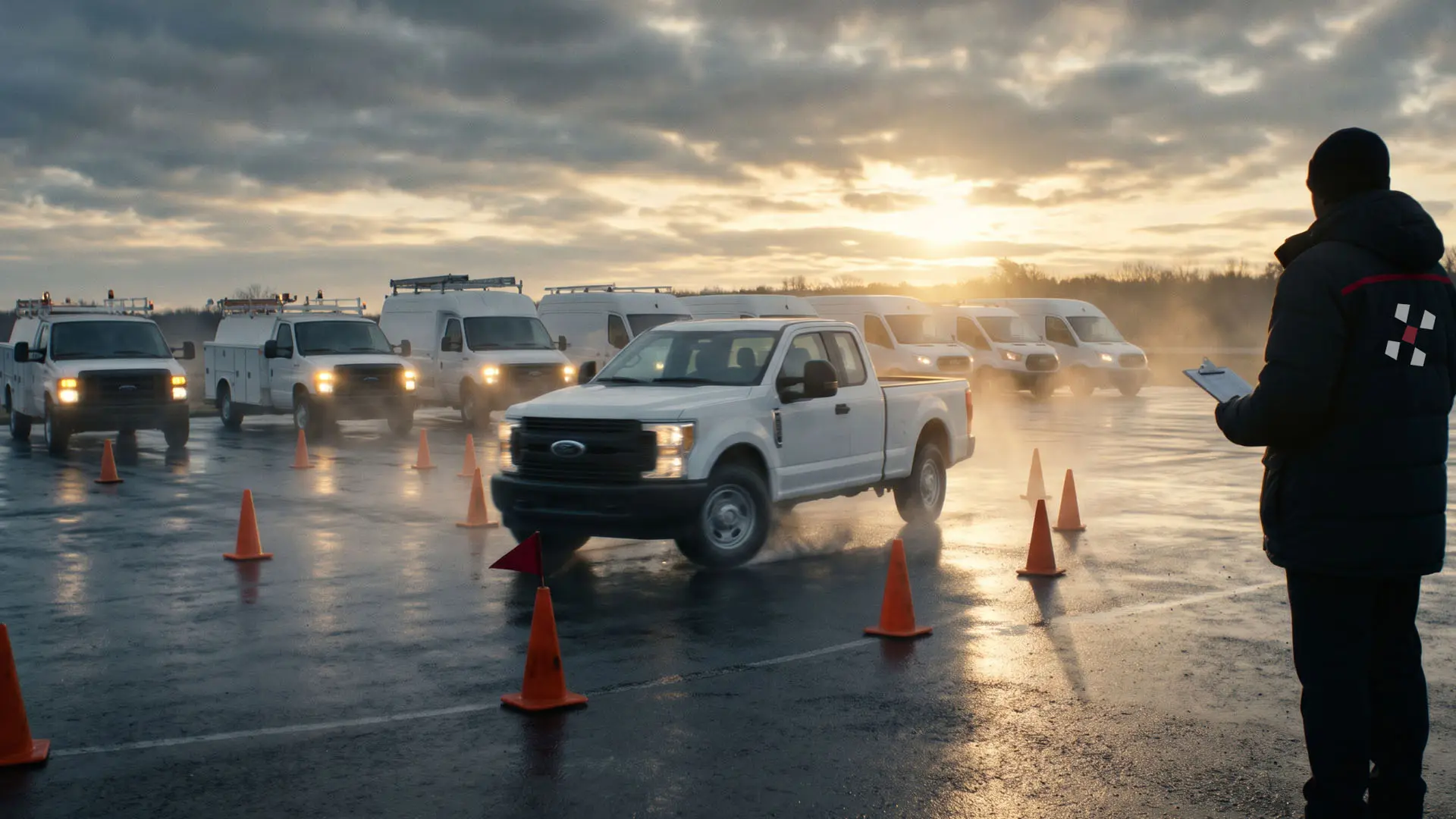
Designing Your 2027 Fleet Safety Program: 7 Steps to Safer Drivers
A safer fleet doesn't happen by accident. It happens by design. A fleet safety program is a structured plan that reduces vehicle crashes by combining crash data review, driver skill evaluation, ongoing training, leadership accountability and measurable goals. As 2026...
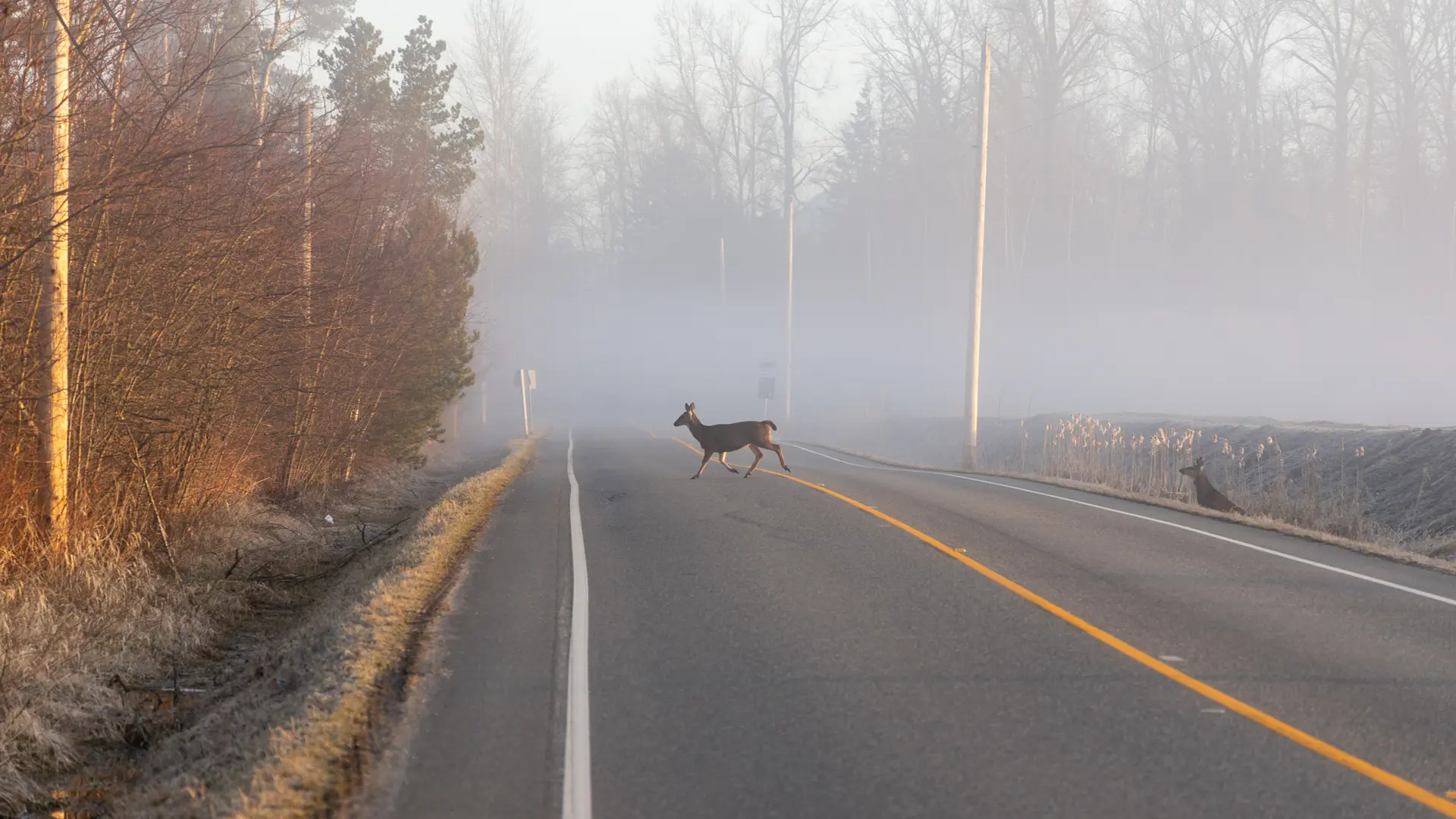
November Driving Risks and How to Reduce Them
How to recognize changing road conditions, reduce risk, and make better decisions behind the wheel. November is one of the riskiest months of the year to drive. Deer activity peaks, daylight saving time ends and pushes commutes into darkness, wet leaves and early ice...
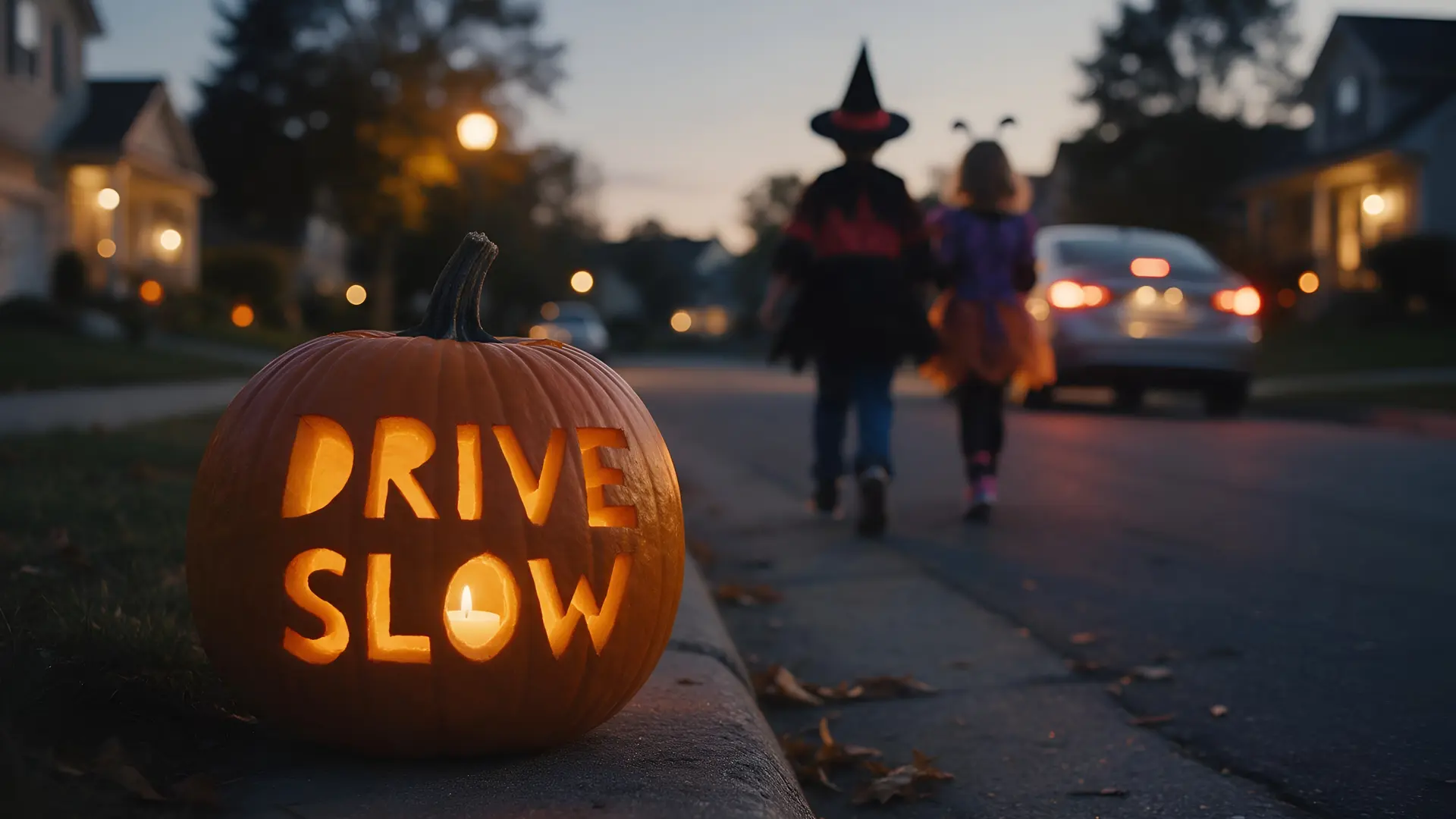
Halloween Driving Safety: Slow Down, Look Ahead, and Expect the Unexpected
Halloween is an exciting night for children and families. Porch lights glow, neighborhoods fill with costumes, and trick-or-treaters move from house to house in the fading light. For drivers, Halloween requires something different: more attention, more patience, and...