

3 Things Every Ohio Driver Needs to Know This Summer:
- Properly inflated tires can improve your fuel economy by up to 3%—critical when gas on the Ohio Turnpike averages above the national rate.
- The "100 Deadliest Days" for teen drivers runs Memorial Day through Labor Day—Northeast Ohio's rural two-lanes and I-76 interchanges are statistically among the most dangerous corridors.
- A pre-trip 7-point vehicle inspection takes under 30 minutes and can prevent the most common roadside breakdowns in Ohio's summer heat.
I. Introduction: Summer Travel in a High-Cost Economy
Summer in Northeast Ohio hits different. The Cuyahoga Valley turns green. Cedar Point calls. Families load up and head east on I-76 toward Pittsburgh, west toward Chicago, or south through Amish Country on 77. But in 2026, that excitement is running headfirst into financial reality—gas prices, maintenance costs, and the psychological weight of driving on highways packed with distracted, exhausted travelers.
This guide exists for two reasons: to protect your wallet and to protect everyone in your vehicle. These goals aren't in conflict. A well-maintained car is a fuel-efficient car. A skilled driver is a calm driver. And a calm, skilled driver on the Ohio Turnpike at 75 mph in July heat is the difference between a great road trip and a tragedy.
At DriveTeam, we teach exactly that—at every level, from teen drivers learning P.B.D.E. fundamentals to emergency responders in our E.R.O.C. pursuit operations courses. The principles in this guide come from the same track where we train Ohio's finest.
II. Strategic Saving: Beating High Gas Prices on Ohio Roads
Pre-Trip Maintenance for Maximum Fuel Efficiency
Tire Pressure: The Cheapest Performance Upgrade You're Ignoring
Under-inflated tires create rolling resistance—essentially forcing your engine to work harder to move the same vehicle. The U.S. Department of Energy estimates that for every 1 PSI drop below the recommended level, fuel economy drops approximately 0.2%. Ohio's dramatic temperature swings between spring nights and July afternoons mean your tires can lose 1–2 PSI without you noticing. Check pressure cold, first thing in the morning, before you hit the ramp onto I-76.
Northeast Ohio tip: Gas stations at Turnpike service plazas (State Line, Mahoning Valley, Portage Lakes) have air pumps—but check your tires before you merge, not after 90 miles of highway driving.
Weight Management: What's in Your Trunk Is Costing You Money
Carrying an extra 100 pounds in your vehicle reduces fuel economy by roughly 1%. Roof cargo carriers—even empty ones—create aerodynamic drag that can reduce MPG by up to 25% at highway speeds. Before your trip, pull everything out of the trunk and ask: do I need this between here and my destination? Leave the unused bike rack in the garage.
Filters & Oil: The Small Stuff That Moves the Needle
A clogged air filter restricts airflow to your engine, forcing it to burn more fuel for less output. Fresh oil reduces internal friction. Neither service is expensive. Both are frequently skipped. Do them before your trip, not after you notice the sluggish throttle response outside Youngstown.
Smart Fueling Tactics for Ohio Travelers
App Integration: Find Cheap Gas Before You Exit
GasBuddy: Real-time crowd-sourced gas prices by zip code. In Northeast Ohio, pricing can vary by $0.30–$0.50 per gallon between Akron city stations and Turnpike plaza rates.
Upside: Cash-back app at participating stations—stack with a fuel-rewards credit card for double savings.
Waze: Displays current gas prices on your route before you reach an exit. Particularly useful on I-80 (the Ohio Turnpike) where exits are spaced 10–20 miles apart and your options are limited.
The Mid-Week Rule
Gas prices typically peak Friday through Sunday as weekend travelers fill up. Fueling Tuesday or Wednesday can save $0.05–$0.15/gallon nationally. For Ohio families planning a weekend departure, filling up Thursday evening is the move.
Loyalty Programs: Stacking Your Savings
Giant Eagle's fuelperks+ program is one of the most aggressive grocery fuel rewards in the country—and it's a Northeast Ohio staple. Every $50 in groceries earns fuel discounts redeemable at GetGo stations across Akron, Cleveland, and the surrounding region. Stack that with a cash-back credit card and you can effectively reduce your per-gallon cost significantly on a fill before a long Turnpike run.
Eco-Driving Technique: The Fuel Economy You Control with Your Right Foot
The 5-Second Acceleration Rule
Aggressive acceleration is the single biggest controllable drain on fuel economy. Instead of flooring it from a light or on-ramp, aim to reach your target speed over 5+ seconds. This is also, not coincidentally, the smoother, safer merge technique we teach in DriveTeam's Corporate ProDriver Hands-On program.
The Highway Sweet Spot: 55–65 MPH
Aerodynamic drag increases exponentially with speed. Most vehicles reach peak fuel efficiency between 45–65 mph. Every 5 mph over 65 costs you approximately 7–14% in fuel economy. On Ohio's wide-open I-76 and I-80 corridors, it's tempting to cruise at 75–80—but the math doesn't lie.
Cruise Control: Use It Smart
On the flat western sections of the Turnpike (west of Strongsville), cruise control is your fuel economy ally. On the rolling terrain through Summit and Portage counties or the hilly eastern stretch toward the Pennsylvania border, manual throttle management—anticipating grades and coasting downhill—can outperform cruise control.
III. Summer Safety: Navigating Ohio's Heat and Highway Traffic
Heat-Proofing Your Vehicle for Ohio Summer Conditions
Coolant System Check
Northeast Ohio summer traffic jams—on I-480, I-77 through Akron, or construction-compressed lanes on the Turnpike—are where overheating happens. Check coolant levels and look for any signs of leaks (white residue near hose connections) before you travel. If your temperature gauge climbs into the red in stopped traffic, turn off the A/C and turn on the heater to draw heat away from the engine. Pull over before it becomes an emergency.
Battery Health: Heat Kills Faster Than Cold
Contrary to popular belief, summer heat degrades car batteries more aggressively than winter cold. High temperatures accelerate internal corrosion. If your battery is 3+ years old, have it load-tested before a long trip. A dead battery at a Turnpike service plaza at 6 PM on a Friday in July is not a recoverable situation without a significant wait.
Defensive Driving in Ohio's High-Volume Summer Traffic
Managing Summer Road Rage
Ohio's highways get complicated in summer. Construction season compresses lanes on I-76, I-480, and the Turnpike simultaneously. Merge points become conflict zones. Other drivers are hot, tired, and late. The technique: **emotional disengagement from other drivers' behavior.** Their aggression is not your emergency. Create space. Let them pass. Three seconds of inconvenience beats an incident at 70 mph every time.
The 3-Second Rule—Extended for Highway Speeds
The classic 3-second following distance rule applies at residential speeds. At highway speeds (65–75 mph), a 4–5 second gap is the appropriate target. On the Turnpike in rain—common in Ohio's summer storm season—extend to 6 seconds minimum. Pick a fixed reference point (a bridge, a sign) and count from when the vehicle ahead passes it to when you do.
Distracted Driving & Fatigue on Ohio's Long Corridors
Highway Hypnosis: The Real Risk on I-76 and I-80
The Ohio Turnpike is 241 miles of monotonous, high-speed driving. The Mahoning Valley stretch and the flat western sections near Toledo are particularly notorious for the phenomenon known as *highway hypnosis*—a state of reduced awareness caused by repetitive visual input at sustained speeds. Signs include missing exits, inability to recall the last 10–15 miles, and drifting within your lane. **The countermeasure:** rotate drivers every 90–120 minutes, consume caffeine before fatigue sets in (not after), and use verbal check-ins with passengers.
Digital Detox Before You Depart
Set your GPS route, download your offline maps for dead zones (the Turnpike has coverage gaps between Sandusky and Toledo), queue your playlists, and silence non-essential notifications before the car moves. Hands-free is not risk-free. Cognitive distraction persists even when your eyes are on the road.
Teen Driver Awareness: The 100 Deadliest Days
For Northeast Ohio Families with New Drivers
The period between Memorial Day and Labor Day is statistically the most dangerous stretch of the year for teen drivers in America. In 2026, increased mileage, peer passengers, late-night driving, and reduced parental oversight all converge. In Ohio, the risk is compounded by:
- Rural two-lane highways in Wayne, Holmes, and Tuscarawas counties with no guardrails and high deer activity
- Congested resort traffic near Geneva-on-the-Lake and Pymatuning
- Night driving on unfamiliar roads after summer events
DriveTeam's P.B.D.E. Full Program is specifically designed to build the skills, knowledge, and decision-making framework teens need before they encounter these scenarios alone. Our 2-Day Advanced course and 4-Hour Winter Skills clinic extend that foundation across Ohio's full range of driving conditions. → Learn more at driveteam.com/teen/
Teen Driver Programs → driveteam.com/teen/
Corporate Fleet Training → driveteam.com/corp/
E.R.O.C. Police, Fire & EMS → driveteam.com/e-r-o-c/
Contact Us → driveteam.com/contact-us/
Frequently Asked Questions
Q: How can I save the most money on gas during a summer road trip in Ohio?
A: The highest-impact moves are pre-trip tire inflation to the manufacturer's spec, removing unnecessary cargo weight, fueling mid-week at off-Turnpike stations using GasBuddy to find local pricing, and driving in the 55–65 mph range where aerodynamic efficiency peaks. Ohio drivers should also maximize Giant Eagle fuelperks+ rewards before departing.
Q: What are the most important car parts to check before a summer road trip?
A: Prioritize coolant level and hose condition, battery health (especially if 3+ years old), tire pressure and tread depth, air filter, and oil level. In Ohio's summer heat, coolant system failure in stopped highway traffic is the most common—and most preventable—breakdown scenario.
Q: How does speed affect fuel economy on the Ohio Turnpike?
A: Fuel economy typically peaks between 45–65 mph. Above 65 mph, aerodynamic drag increases exponentially—each additional 5 mph above that threshold costs approximately 7–14% in fuel efficiency. On I-80's long straight sections, cruise control at 65 mph versus 75 mph can translate to a meaningful reduction in fuel cost over a 200+ mile trip.
Q: What is highway hypnosis and how do I avoid it on long Ohio drives?
A: Highway hypnosis is a state of reduced conscious awareness that occurs during extended monotonous highway driving—common on the Ohio Turnpike and I-76. It's characterized by missing exits, inability to recall recent miles, and involuntary lane drift. Prevention: driver rotations every 90 minutes, conversation with passengers, varied audio content, and planned rest stops at Turnpike service plazas.
Q: When are the most dangerous days for teen drivers in Northeast Ohio?
A: The "100 Deadliest Days"—Memorial Day through Labor Day—represent the peak risk period for teen drivers nationally and in Ohio specifically. Increased summer mileage, peer passengers, and unfamiliar roads combine to elevate crash risk significantly. Enrolling teens in a structured driver training program before summer is the most effective risk mitigation available.
Q: What driving apps work best on the Ohio Turnpike?
A: GasBuddy and Waze both display real-time fuel prices near Turnpike exits before you commit to an off-ramp. Download offline maps (Google Maps or Waze) for the Sandusky-to-Toledo corridor where cellular coverage can be inconsistent. Set everything before departure—in-motion app interaction is a distracted driving risk.
V. The "Ready-to-Roll" Summer Inspection Checklist
*Complete this 30-minute pre-trip inspection the evening before departure.*
Under the Hood
[ ] Coolant level at the full cold line; no visible hose leaks
[ ] Engine oil level and condition (dark/gritty = change it)
[ ] Air filter (hold it to light—if you can't see through it, replace it)
[ ] Battery terminals clean and tight; have load-tested if 3+ years old
[ ] Windshield washer fluid topped off (summer bugs are real)
Tires
[ ] Pressure checked cold at manufacturer spec (door jamb sticker)
[ ] Tread depth—Penny Test: Lincoln's head disappears = replace
[ ] Spare tire pressure verified
[ ] Jack, lug wrench, and wheel lock key confirmed present
Safety Systems
[ ] All lights functional: headlights, brake lights, turn signals, hazards
[ ] A/C output tested (weak output before a trip = repair before departure)
[ ] Brakes—any grinding, pulling, or extended stopping distance = inspect immediately
[ ] Wipers streak-free (Ohio summer storms arrive without warning)
Emergency Kit
[ ] Water (one gallon minimum per passenger for summer breakdowns)
[ ] Road flares or LED triangle reflectors
[ ] Basic first aid kit
[ ] Jumper cables or portable jump starter
[ ] Phone charger / power bank
Before You Pull Out of the Driveway
[ ] GPS route loaded and offline maps downloaded
[ ] Playlist or audio queued
[ ] Phone on Do Not Disturb driving mode
[ ] All passengers buckled
VI. Conclusion: The Skill Behind the Savings
Here's what most summer driving guides won't tell you: vehicle preparation gets you halfway there. The other half is the driver.
A well-maintained car with an unskilled, distracted, or fatigued driver behind the wheel is still a liability on the Ohio Turnpike. The techniques in this guide—smooth acceleration, extended following distances, fatigue management, emotional disengagement from aggressive drivers—aren't common sense. They're skills. And like any skill, they require instruction and practice to become instinct.
That's what DriveTeam exists to provide. Whether you're a parent sending a teenager into their first summer of independent driving, a fleet manager whose team logs thousands of miles on Ohio highways, or an individual driver who wants genuine confidence behind the wheel—there's a DriveTeam program built for you.
Knowledge. Skills. Decision Making. That's not a slogan. It's the difference between a close call and a statistic.
More From Our Blog
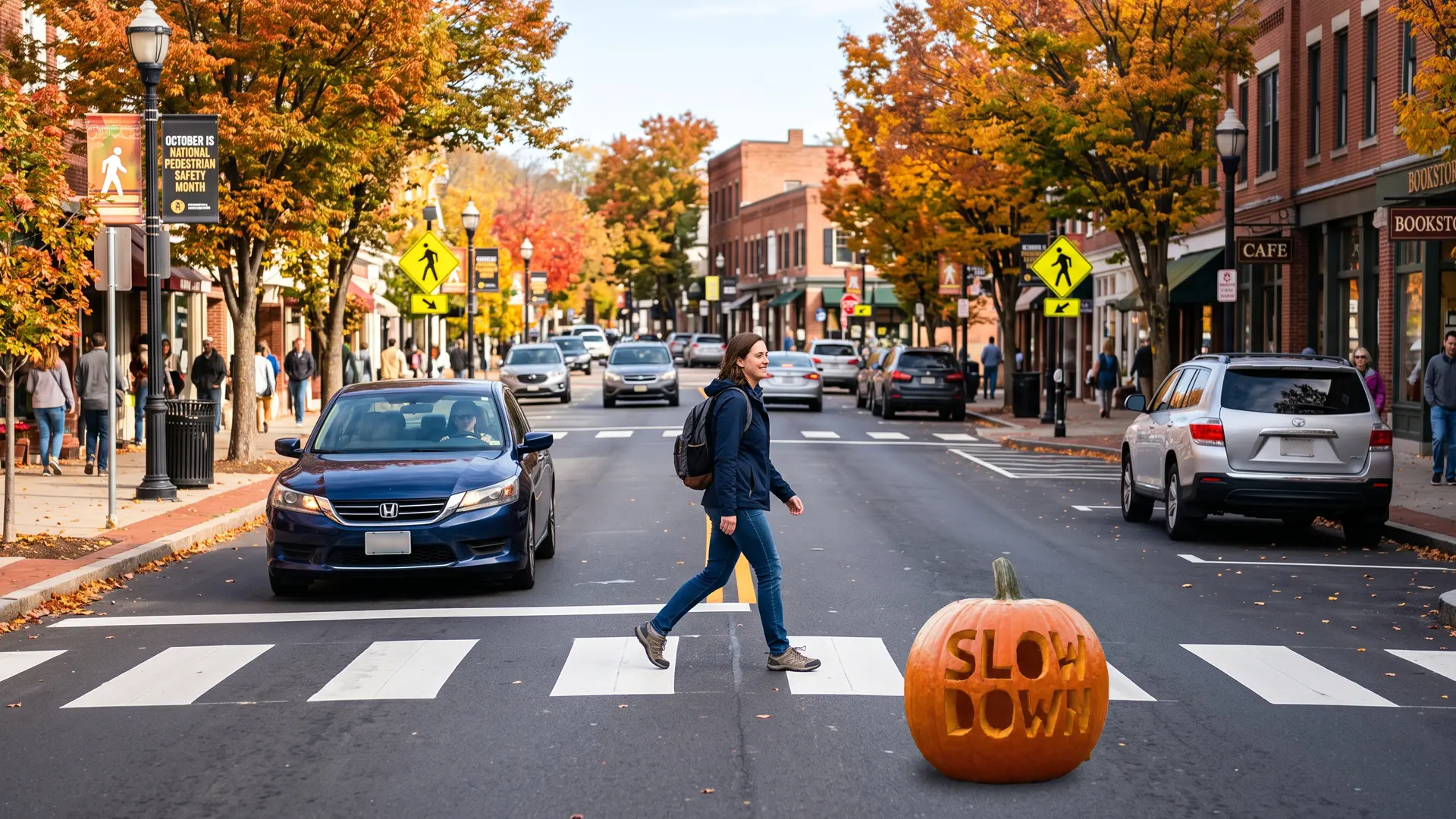
October Is National Pedestrian Safety Month — Here’s What Drivers Need to Know
October doesn't just mean cooler mornings and changing leaves. It's National Pedestrian Safety Month, and the roads carry more foot traffic than almost any other time of year — school pickup lines, sports practices, trick-or-treaters, and Halloween night itself. NHTSA...

Fall Driving Safety Tips: 8 New Hazards Every Driver Needs to Know
The 100 Deadliest Days are over. Fall driving risk is just getting started. As the school-year routine settles in and the 100 Deadliest Days of Summer fade into the rearview mirror, it's tempting to assume the riskiest stretch of the driving year is behind us. It...
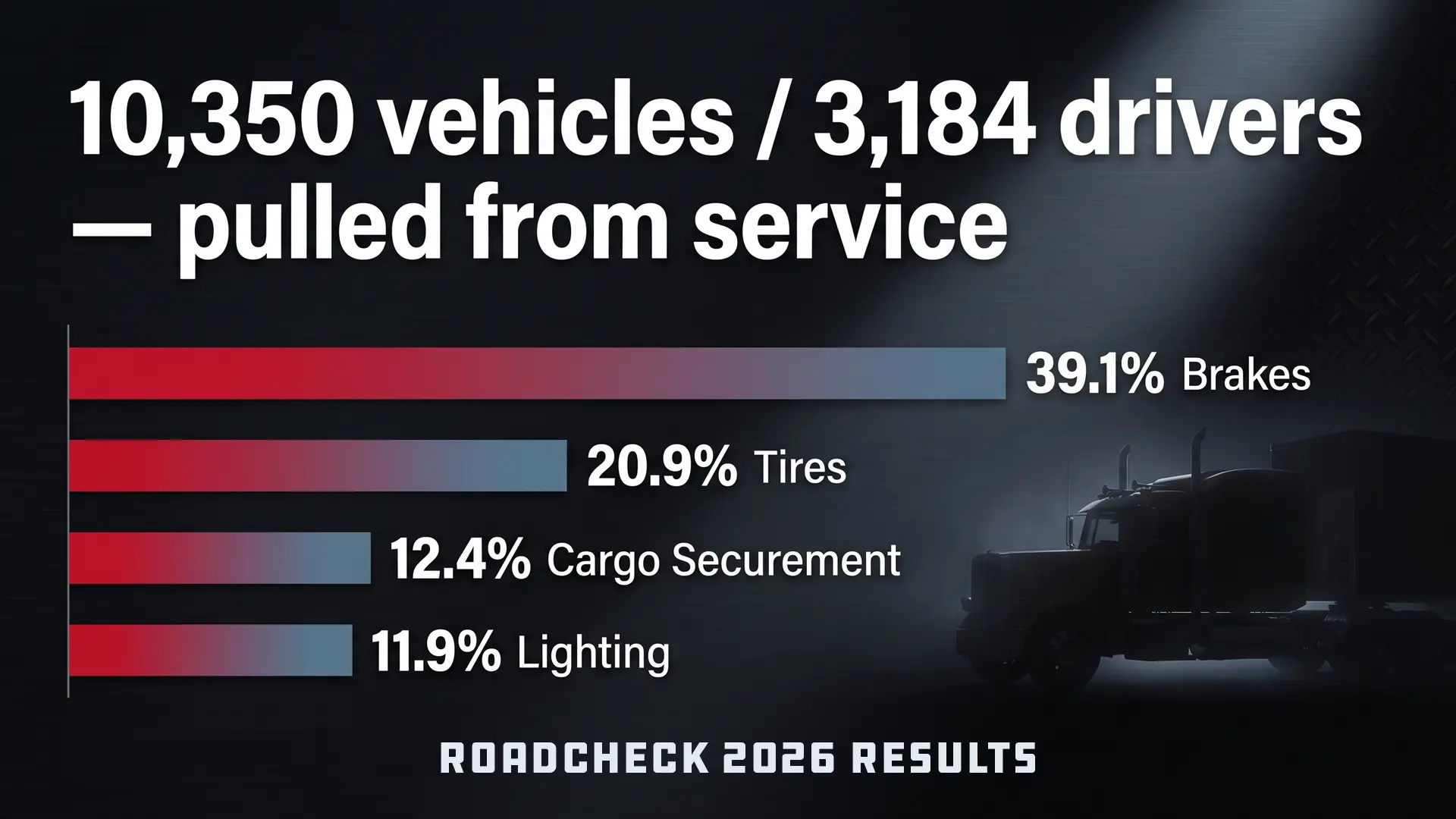
Roadcheck 2026 Results: What 10,000 Grounded Trucks Reveal About Your Fleet’s Risk
During this year's three-day International Roadcheck, certified inspectors conducted 54,575 roadside inspections across the U.S., Canada, and Mexico — and sidelined 10,350 commercial motor vehicles and 3,184 drivers for safety violations serious enough to warrant an...